


Old Courthouse - Gateway Arch National Park
U.S. NPS
SITE
11 N 4th St,
St. Louis, MO 63102
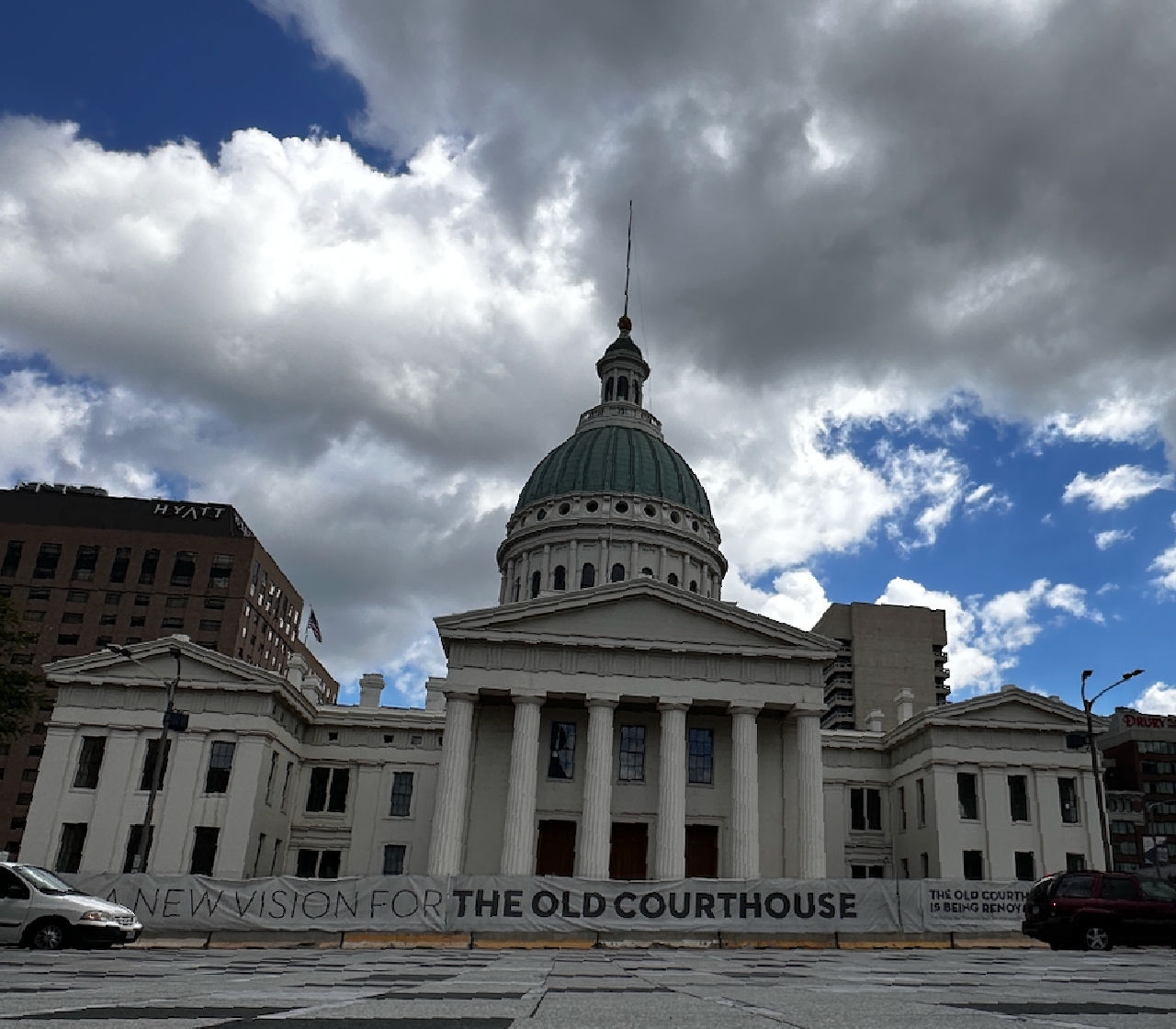
The Old Courthouse is part of the Jefferson National Expansion Memorial that is operated by the National Park Service. The Old Courthouse was the site of the first two trials of the pivotal Dred Scott case in 1847 and 1850. Each year on New Year's Day, it was the custom in St. Louis to hold a public auction of slaves at the Old Courthouse from the steps on which you are standing. The slaves being auctioned belonged to estates that needed to be settled by the State of Missouri. If a “fair market value” could not be obtained, these estate slaves would be held in the county jail until New Year's Day. The last of these public slave auction took place on the steps of the east entrance on January 1, 1861. Seven slaves had been brought to be auctioned from the steps. Over two thousand people had shown up in order to put an end to the slave auction. Whenever the auctioneer asked for a bid, the crowd shouted, “two dollars, two dollars,” or some other ridiculously low bid over and over. After about two hours of this, the auctioneer gave up and took the slaves back to the jail. This was the last time the auction was ever held on the Old Courthouse steps.
Dred Scott Heritage Foundation → Dred Scott Lives
HISTORY

One of the most important cases ever tried in the United States was heard in St. Louis' Old Courthouse. Dred Scott v. Sandford was a landmark decision that helped changed the entire history of the country. The Supreme Court decided the case in 1857, and with their judgment that the Missouri Compromise was void and that no African-Americans were entitled to citizenship, hastened the Civil War which ultimately led to freedom for the enslaved people of the United States. In 1846, having failed to purchase his freedom, Scott filed a freedom suit in St. Louis Circuit Court. Missouri precedent, dating to 1824, had held that slaves freed through prolonged residence in a free state or territory, where the law provided for slaves to gain freedom under such conditions, would remain free if returned to Missouri. The doctrine was known as "Once free, always free". Scott and his wife had resided for two years in free states and free territories, and his eldest daughter had been born on the Mississippi River, between a free state and a free territory.

Facts of the Case
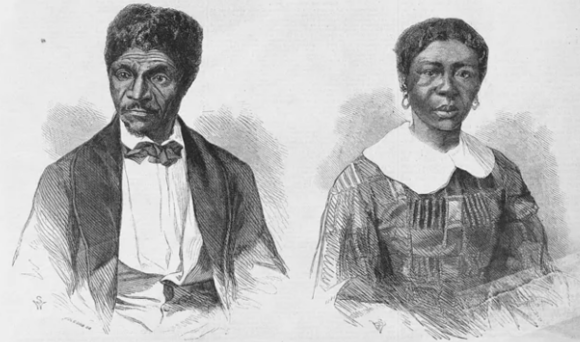
Dred Scott was a slave in Missouri. From 1833 to 1843, he resided in Illinois (a free state) and in the Louisiana Territory, where slavery was forbidden by the Missouri Compromise of 1820. After returning to Missouri, Scott filed suit in Missouri court for his freedom, claiming that his residence in free territory made him a free man. After losing, Scott brought a new suit in federal court. Scott's master maintained that no “negro” or descendant of slaves could be a citizen in the sense of Article III of the Constitution.
Question
Was Dred Scott free or a slave?
Conclusion
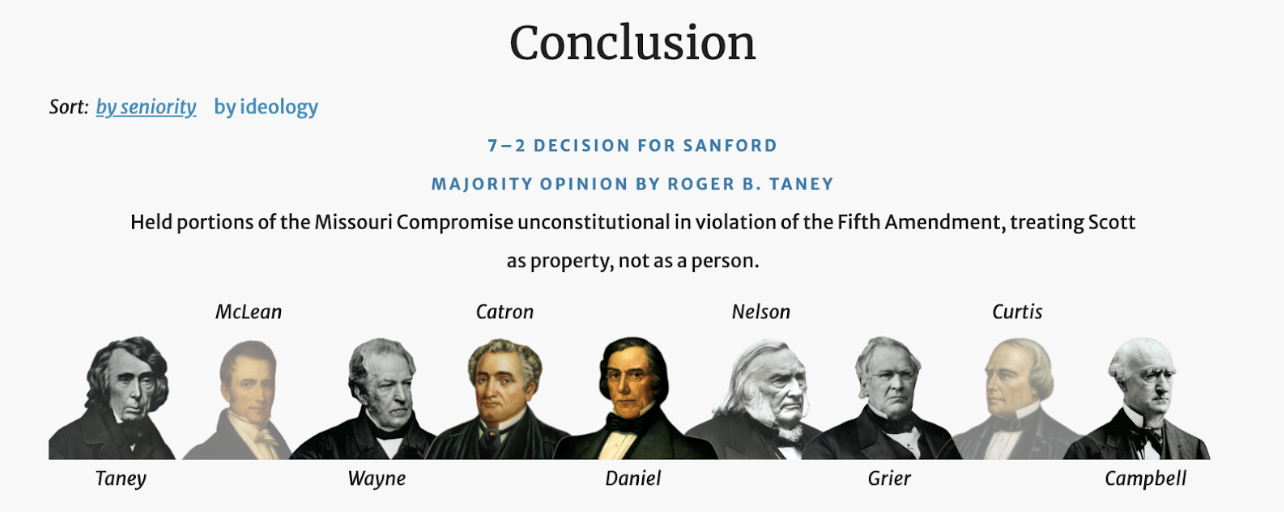
The majority held that “a negro, whose ancestors were imported into [the U.S.], and sold as slaves,” whether enslaved or free, could not be an American citizen and therefore did not have standing to sue in federal court. Because the Court lacked jurisdiction, Taney dismissed the case on procedural grounds. Taney further held that the Missouri Compromise of 1820 was unconstitutional and foreclosed Congress from freeing slaves within Federal territories. The opinion showed deference to the Missouri courts, which held that moving to a free state did not render Scott emancipated. Finally, Taney ruled that slaves were property under the Fifth Amendment, and that any law that would deprive a slave owner of that property was unconstitutional. In dissent, Benjamin Robbins Curtis criticized Taney for addressing the claim’s substance after finding the Court lacked jurisdiction. He pointed out that invalidating the Missouri Compromise was not necessary to resolve the case, and cast doubt on Taney’s position that the Founders categorically opposed anti-slavery laws. John McLean echoed Curtis, finding the majority improperly reviewed the claim’s substance when its holding should have been limited to procedure. He also argued that men of African descent could be citizens because they already had the right to vote in five states.
Impact
The newspaper coverage of the court ruling, and the 10-year legal battle raised awareness of slavery in non-slave states. The arguments for freedom were later used by U.S. President Abraham Lincoln. The words of the decision built popular opinion and voter sentiment for his Emancipation Proclamation and the three constitutional amendments ratified shortly after the Civil War: The Thirteenth, Fourteenth and Fifteenth amendments, abolishing slavery, granting former slaves' citizenship, and conferring citizenship to anyone born in the United States and "subject to the jurisdiction thereof" (excluding subjects to a foreign power such as children of foreign ambassadors).