


John Brown Memorial Park and Museum State Historic Site
City of Osawatomie
SITE
Park
10th & Main St.
Osawatomie, KS 66064
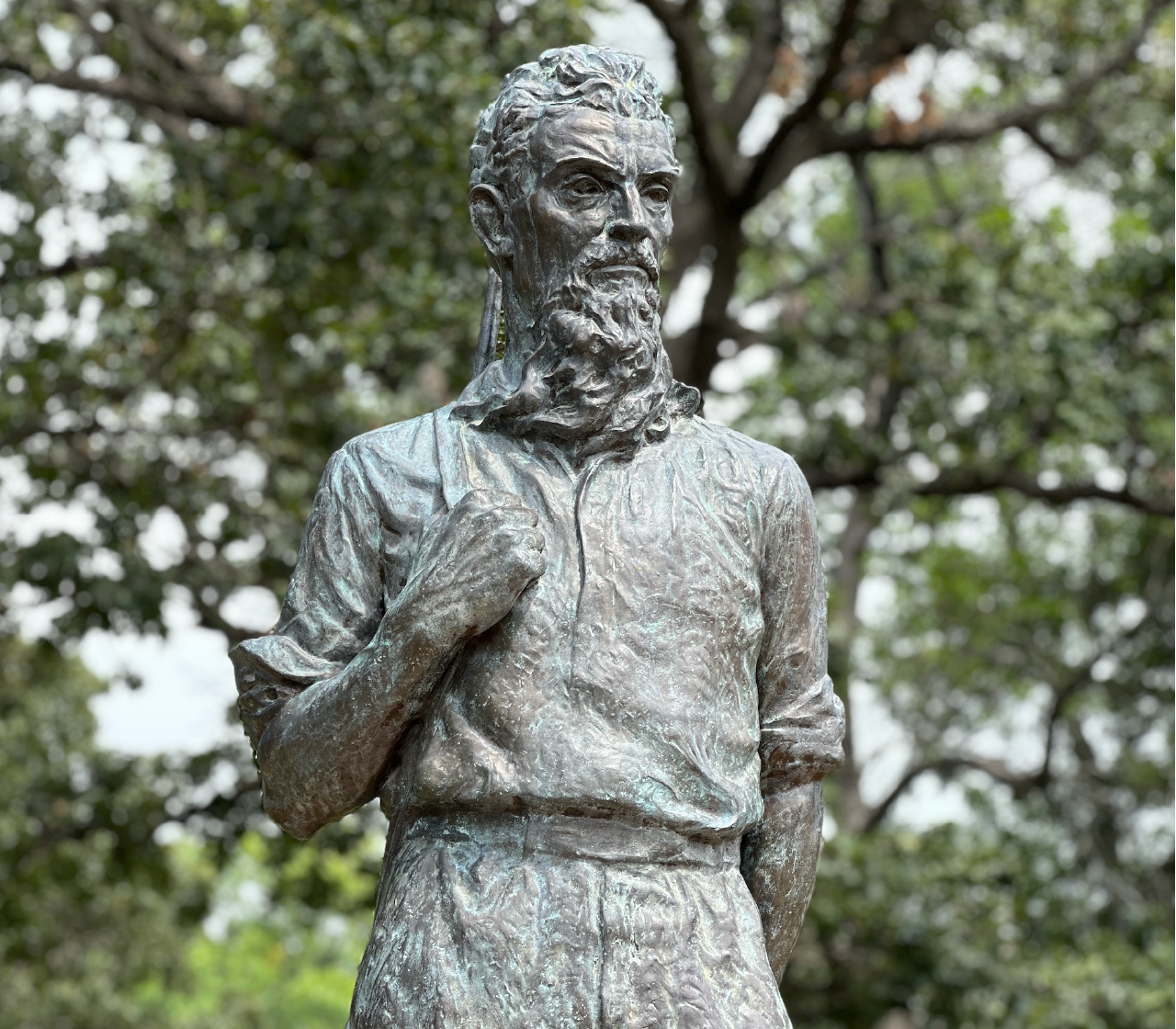
This park commemorates events related to John Brown's actions during the territorial period known as "Bleeding Kansas." While episodes of violence stemming from the political contest between those who supported and opposed the extension of slavery remain the central aspect of historical markers and monuments in this part of Osawatomie, the park also shares the history of area farmers who hoped to avoid the conflict. In 1855, this park was home to a simple log cabin built in 1855 by Samuel Glenn. The cabin was later purchased by Congregational pastor Samuel Adair and his wife Florella--the half-sister of the famous abolitionist John Brown. Several of John Brown's sons joined the Adairs in Kansas during the period of conflict over slavery known as "Bleeding Kansas." The problems his sons were experiencing led to John Brown joining the family in Osawatomie, where he encountered many like-minded anti-slavery settlers eager to rebel against the pro-slavery government.
Battle of Osawatomie Historical Marker - 38° 29.863′ N, 94° 57.525′ W
Marker Page
The Soliders Monument - 38° 29.885′ N, 94° 57.396′ W
Marker Page
Museum
1000 Main St,
Osawatomie, KS 66064
913-755-4384
Tue - Sat, 10am-5pm
John Brown Museum features exhibits in two rooms of the historic Adair cabin, along with displays outside the cabin, which preserves the historic structure in Osawatomie, Miami County. The John Brown Museum is located within the original log cabin of Samuel and Florella Adair, who constructed the building more than 160 years ago. Florella Adair was John Brown's half-sister, and the couple allowed Brown to use this cabin as a safehouse during his time in Kansas Territory. The Adair Cabin was originally located one mile west of the small free-state town of Osawatomie. In 1912, the cabin was relocated here, in the center of John Brown Memorial Park. The park includes several monuments and markers commemorating the Battle of Osawatomie, a violent conflict that erupted on August 30, 1856, between pro-slavery and anti-slavery forces that earned John Brown the famous nickname “Osawatomie Brown.” In 1928, a stone pavilion was erected around the log cabin, protecting the building from destructive weather. In 1995, an arsonist broke into the John Brown Museum and started a fire in the back room. A swift response on behalf of the Osawatomie Fire Department limited the extent of the damage to the floor, two windows, and part of the roof, which were repaired and replaced. Today, the John Brown Museum preserves and shares the history of the Adairs and John Brown, and the Adair Cabin serves as a living artifact of the pre-Civil War era known as Bleeding Kansas.
HISTORY
Samuel and Florella Adair moved to Osawatomie, Kansas, to settle and begin the first Congregational church in the town. Due to advertisement in northern newspapers, several other pioneers arrived as well, hoping to keep the territory anti-slavery. However, with a pro-slavery government and the movement into the area of those from the bordering state of Missouri who favored slavery, the inhabitants of Kansas struggled to find the peace they sought. The well known abolitionist John Brown was half-brother to Florella Adair, and shortly after the Adairs' arrival in Kansas, five of Brown's sons followed the couple. Illness and strife soon had Brown heading to Osawatomie to help his children.
Although John Brown did not intend to stay in Kansas, he did spend 20 months there. Finding a sympathetic ear in the Free-state men of the area, he was able to express his abolitionist ideas. While in Kansas, Brown was a frequent visitor to the cabin. From time to time, he used the cabin as a sort of headquarters from which to conduct his anti-slavery agenda, and it is rumored that the back room of the cabin served a s hide-out for runaway slaves from the south. During this time, Brown and other Kansas settlers engaged in skirmishes over the issue of slavery, particularly against men from the pro-slavery border state of Missouri. In one instance, Osawatomie itself was attacked and burned, however the cabin remained unscathed.
After serving as a Chaplain at Fort Leavenworth during the Civil War, Samuel Adair returned home to Osawatomie. Unfortunately, he lost his wife Florella to illness in 1865. After his death in 1898, the cabin went to his son, Charles Storrs Adair. Fourteen years later, the John Brown cabin was deconstructed and moved to its present location in John Brown Memorial Park- the site of the battle of Osawatomie in which the town was burned. In 1928, a stone surround was built to protect the cabin and ward off further deterioration. Today, the cabin is the site of the John Brown Museum. Visitors can tour the cabin and see the low ceilings and original domestic artifacts belonging to Samuel and Florella Adair.
Battle of Osawatomie

On August 30, 1856, a battle at this location pitted Free State men against those who hoped to extend slavery into Kansas Territory. One of several violent conflicts that led to Kansas Territory's nickname of "Bleeding Kansas" in 1856, this event also spread the fame of anti-slavery warrior John Brown. After pro-slavery men killed his son, and after hearing that they also planned to attack the anti-slavery settlers at Osawatomie, Brown and about thirty men moved to defend the community. Although outnumbered, John Brown's force attacked John Reid and his pro-slavery force of at least 250 "Border Ruffians"-a nickname given by local residents to Missouri men who hoped to extend slavery into the territory by violence and fraud. The battle lasted until Brown's men used most of their ammunition repelling the first wave of attackers. Before Reid could bring his cannon to bear against Brown and his men, the Free State men retreated in different routes to lure the pro-slavery forces away from the city. When the pro-slavery forces could not catch Brown's men, they returned and destroyed most of the town of Osawatomie simply because it was home to many Free State settlers who also opposed the extension of slavery into Kansas.
The Soldiers Monument
The Soldiers Monument was dedicated on August 30, 1877 before an audience of 10,000 people to honor the five Free State men killed in the Battle of Osawatomie on August 30, 1856. The monument is the grave of Frederick Brown, George W. Partridge, David Garrison and Theron Parker Powers. Charles Kaiser's body was never found, but his name appears on the stone. John Brown's name appears on the monument, but his grave is in North Elba, New York.