


Harriet Tubman Monument
unknown
SITE
901 Craven Street
Beaufort, S.C. 29902
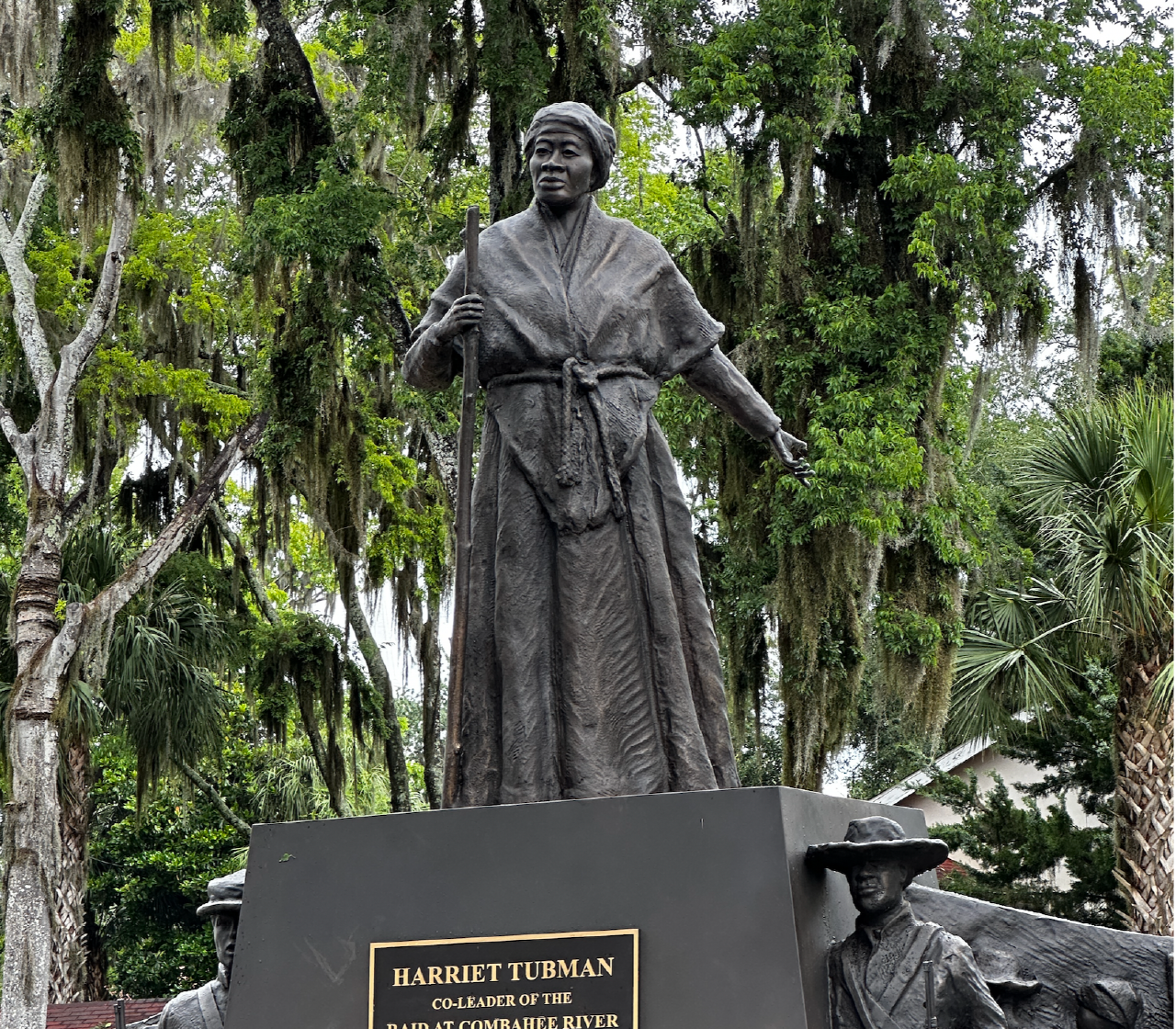
Sculptor Ed Dwight, who is known for completing more than 100 history-rich memorials and art projects dedicated to the African experience, has created a 14 foot tall larger than life-sized sculpture of Tubman on top of a bronze pedestal that features scenes depicting slaves rushing toward their escape and refuge in 1863. The sculpture features an image of a typical soldier under arms and provides an area for imagery or interpretative text to share more about the Combahee River Raid and Tubman’s involvement in Beaufort. The monument depicting Harriet Tubman’s heroic ventures now sits next to the 161 year old church on Craven Street in downtown Beaufort, SC. Tabernacle Baptist is also the burial place of Robert Smalls, who was born a slave in Beaufort and became a Civil War hero and Congressman. A bust of Smalls is also on the church grounds. But her work in South Carolina during the Civil War often gets overlooked, said the Rev. Kenneth Hodges, the church’s pastor for 29 years. The monument is the very first in the state marking her daring mission in June 1863 along the Combahee River.
HISTORY
On November 7, 1861 a Federal fleet commanded by Commodore Samuel Francis DuPont, with a force of 12,000 men under General Thomas W. Sherman, attacked and easily took Forts Walker and Beauregard located on opposite sides of the Beaufort River at the entrance to the Port Royal harbor. The town of Beaufort and the Sea Islands were evacuated by the majority of the white inhabitants who abandoned townhouses and plantations, leaving behind most of their slaves. In the spring of 1862, Harriet Tubman decided to go to the South Carolina Sea Islands to help alleviate the suffering of a people abruptly freed and in need of the basic necessities of life. In Beaufort, Harriet Tubman served the Union army in many capacities. She served as a scout, spy, and nurse and assisted in the recruitment of black soldiers. Tubman also ran an “eating house” in Beaufort. She established a “wash house” where she taught newly freed women to do washing, sewing, and baking for the Union soldiers to become self-sufficient.