


Kennesaw Mountain National Battlefield Park
U.S. NPS
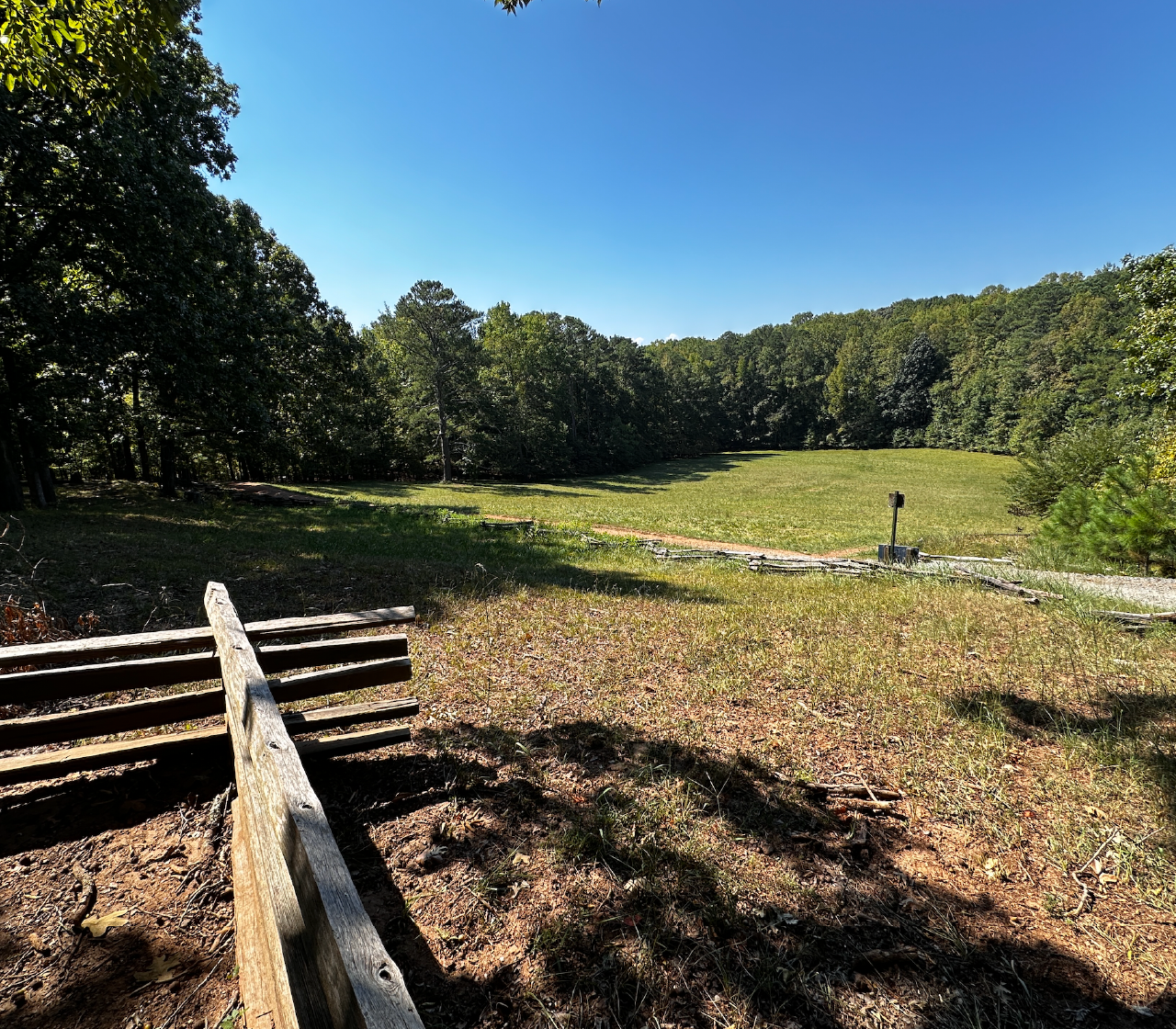
SITE
900 Kennesaw Mountain Dr
Kennesaw, GA 30152
Daily 9am-5pm
Parking - multiple
- Kennesaw Mountain
- Cheatham Hill
- Kolb’s Farm
- 22 miles of trails
- Artifact collection in Visitors Center
- Park Museum Tours: Mon, Wed, Fri at 2pm - 30min each
- Kennesaw: One Last Mountain park film
HISTORY

At 8:00 a.m. on June 27, Union artillery opened a furious bombardment with over 200 guns on the Confederate works and the Rebel artillery responded in kind. Lieutenant Colonel Joseph S. Fullerton wrote, "Kennesaw smoked and blazed with fire, a volcano as grand as Etna." As the Federal infantry began moving soon afterward, the Confederates quickly determined that much of the 8 miles (13 km) wide advance consisted of demonstrations rather than concerted assaults. The first of those assaults began at around 8:30 a.m., with three brigades of Brigadier General Morgan L. Smith's division (Major General John A. Logan's XV Corps, Army of the Tennessee) moving against Loring's corps on the southern end of Little Kennesaw Mountain and the spur known as Pigeon Hill near the Burnt Hickory Road. If the attack were successful, capturing Pigeon Hill would isolate Loring's corps on Kennesaw Mountain. All three brigades were disadvantaged by the approach through dense thickets, steep and rocky slopes, and a lack of knowledge of the terrain. About 5,500 Union troops in two columns of regiments moved against about 5,000 Confederate soldiers, well entrenched.
On the right of Smith's attack, the brigade of Brigadier General Joseph A. J. Lightburn was forced to advance through a knee-deep swamp, and were stopped short of the Confederate breastworks on the southern end of Pigeon Hill by enfilading fire. They were able to overrun the rifle pits in front of the works, but could not pierce the main Confederate line. To their left, the brigades of Colonel Charles C. Walcutt and Brigadier General Giles A. Smith crossed difficult terrain interrupted by steep cliffs and scattered with huge rocks to approach the Missouri brigade of Brigadier General Francis Cockrell. Some of the troops were able to reach as far as the abatis, but most were not and they were forced to remain stationary, firing behind trees and rocks. When General Logan rode forward to judge their progress, he determined that many of his men were being "uselessly slain" and ordered Walcutt and Smith to withdraw and entrench behind the gorge that separated the lines.
About 2 miles (3.2 km) to the south, Thomas's troops were behind schedule, but began their main attack against Hardee's corps at 9:00 a.m. Two divisions of the Army of the Cumberland—about 9,000 men under Brigadier General John Newton (Major General Oliver O. Howard's IV Corps) and Brigadier General Jefferson C. Davis (Maj. Gen. John M. Palmer's XIV Corps)—advanced in column formation rather than the typical broad line of battle against the Confederate divisions of major generals Benjamin F. Cheatham and Patrick R. Cleburne, entrenched on what is now known as "Cheatham Hill". On Newton's left, his brigade, under Brigadier General George D. Wagner, attacked through dense undergrowth, but was unable to break through the abatis and fierce rifle fire. On his right, the brigade of Brigadier General Charles G. Harker charged the Tennessee brigade of Brigadier General Alfred Vaughan and was repulsed. During a second charge, Harker was mortally wounded.
Davis's division, to the right of Newton's, also advanced in column formation. While such a movement offered the opportunity for a quick breakthrough by massing power against a narrow point, it also had the disadvantage of offering a large concentrated target to enemy guns. Their orders were to advance silently, capture the works, and then cheer to give a signal to the reserve divisions to move forward to secure the railroad and cut the Confederate army in two. Colonel Daniel McCook's brigade advanced down a slope to a creek and then crossed a wheat field to ascend the slope of Cheatham Hill. When they reached within a few yards of the Confederate works, the line halted, crouched, and began firing. But the Confederate counter fire was too strong and McCook's brigade lost two commanders (McCook and his replacement, Colonel Oscar F. Harmon), nearly all of its field officers, and a third of its men. McCook was killed on the Confederate parapet as he slashed with his sword and shouted "Surrender, you traitors!" Colonel John G. Mitchell's brigade on McCook's right suffered similar losses. After ferocious hand-to-hand fighting, the Union troops dug in across from the Confederates, ending the fighting around 10:45 a.m. Both sides nicknamed this place the "Dead Angle".
To the right of Davis's division, Major General John W. Geary's division of Major General Joseph Hooker's XX Corps advanced, but did not join in Davis's attack. Considerably farther to the right, however, was the site of the only success of the day. Schofield's army had been assigned to demonstrate against the Confederate left and he was able to put two brigades across Olley's Creek without resistance. That movement, along with an advance by Major General George Stoneman's cavalry division on Schofield's right, put Union troops within 5 miles (8.0 km) of the Chattahoochee River, closer to the last river protecting Atlanta than any unit in Johnston's army.
