

Springfield,
Illinois
HISTORY - LINCOLN IN SPRINGFIELD
Lincoln was born into poverty on February 12, 1809, in a log cabin on Sinking Spring Farm near Hodgenville, Kentucky. In 1816, the family moved to Indiana, where land titles were more reliable. They settled on a forested plot in Little Pigeon Creek Community. Lincoln's father bought multiple farms in Kentucky but could not get clear property titles to any, losing hundreds of acres in legal disputes. In March 1830, fearing another milk-sickness outbreak, several members of the extended Lincoln family, including Abraham, moved west to Illinois and settled in Macon County.
In 1831, Lincoln's father moved the family to a new homestead in Coles County, Illinois, after which Abraham struck out on his own. He made his home in New Salem, Illinois, for six years. In 1832, he declared his candidacy for the Illinois House of Representatives, though he interrupted his campaign to serve as a captain in the Illinois Militia during the Black Hawk War. In his political campaigning, Lincoln advocated for navigational improvements on the Sangamon River. When Lincoln returned home from the war, Lincoln served as New Salem's postmaster and later as county surveyor, but he continued his voracious reading and decided to become a lawyer.
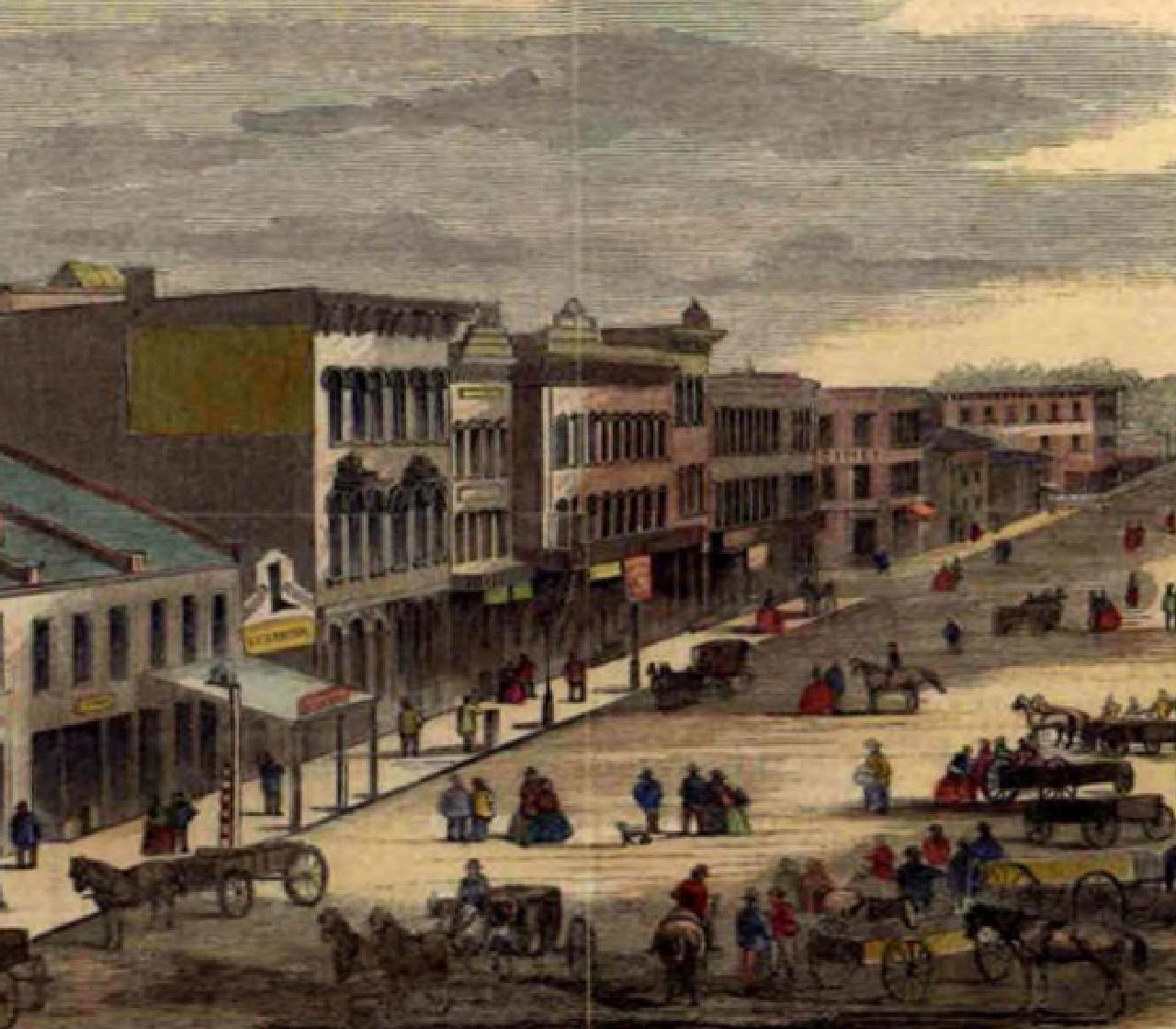
Lincoln was admitted to the Illinois bar on September 9, 1836. He moved to Springfield and began to practice law under John T. Stuart, Mary Todd's cousin. He partnered for several years with Stephen T. Logan and, in 1844, began his practice with William Herndon. In his Springfield practice, according to Donald, Lincoln handled "virtually every kind of business that could come before a prairie lawyer". He dealt with many transportation cases in the midst of the nation's western expansion, particularly river barge conflicts under the new railroad bridges. In 1849 he received a patent for a flotation device for the movement of riverboats in shallow water and Lincoln initially favored riverboat legal interests, but he represented whoever hired him. He represented a bridge company against a riverboat company in Hurd v. Rock Island Bridge Company, a landmark case involving a canal boat that sank after hitting a bridge. His patent was never commercialized, but it made Lincoln the only president to hold a patent. Lincoln appeared before the Illinois Supreme Court in 411 cases. From 1853 to 1860, one of his largest clients was the Illinois Central Railroad, which Lincoln successfully sued to recover his legal fees.
Lincoln represented William "Duff" Armstrong in his 1858 trial for the murder of James Preston Metzker. The case is famous for Lincoln's use of a fact established by judicial notice to challenge the credibility of an eyewitness. After a witness testified to seeing the crime in the moonlight, Lincoln produced a Farmers' Almanac showing the Moon was at a low angle, drastically reducing visibility. Armstrong was acquitted. In an 1859 murder case, he defended "Peachy" Quinn Harrison, the grandson of Peter Cartwright, Lincoln's political opponent. Harrison was charged with the murder of Greek Crafton who, according to Cartwright, said as he lay dying that he had "brought it upon myself" and that he forgave Harrison. Lincoln angrily protested the judge's initial decision to exclude Cartwright's claim as hearsay. Lincoln argued that the testimony involved a dying declaration and so was not subject to the hearsay rule. Instead of holding Lincoln in contempt of court as expected, the judge, a Democrat, admitted the testimony into evidence, resulting in Harrison's acquittal.
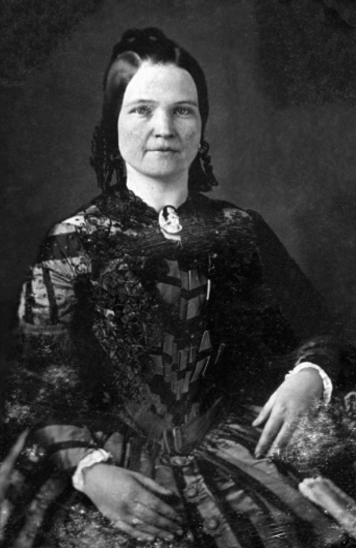
In 1839, Lincoln met Mary Todd in Springfield, Illinois, and the following year they became engaged. She was the daughter of Robert Smith Todd, a wealthy lawyer and businessman in Lexington, Kentucky. Their wedding, which was set for January 1, 1841, was canceled because Lincoln did not appear, but they reconciled and married on November 4, 1842, in the Springfield home of Mary's sister. While anxiously preparing for the nuptials, he was asked where he was going and replied, "To hell, I suppose". In 1844, the couple bought a house in Springfield near his law office. Mary kept house with the help of a hired servant and a relative.
Lincoln "was remarkably fond of children" and the Lincolns were not considered to be strict with their own. In fact, Lincoln's law partner William H. Herndon would grow irritated when Lincoln brought his children to the law office. Their father, it seemed, was often too absorbed in his work to notice his children's behavior. Herndon recounted, "I have felt many and many a time that I wanted to wring their little necks, and yet out of respect for Lincoln I kept my mouth shut. Lincoln did not note what his children were doing or had done."



SITE
426 S. 7th Street
Springfield, IL 62701
Daily 9am - 5pm
The 4-block Lincoln Home Neighborhood is open to pedestrians and closed to vehicles.
Parking - dedicated parking lot, $2 /hr
When driving down 7th street, our parking lot is located on the left-hand side after passing the Visitor Center
Guided Tours
- Tickets at Visitors Center
- Free
- 1st come 1st served
- 20 - 25min
- Shit gets busty March - Nov
HISTORY
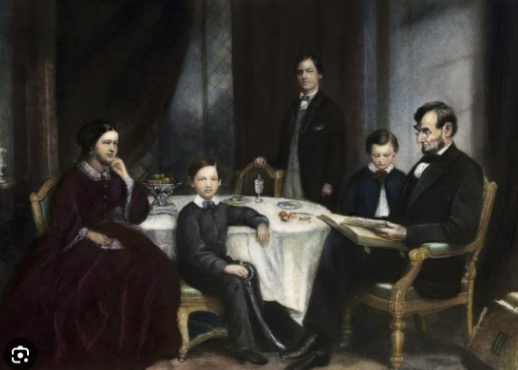
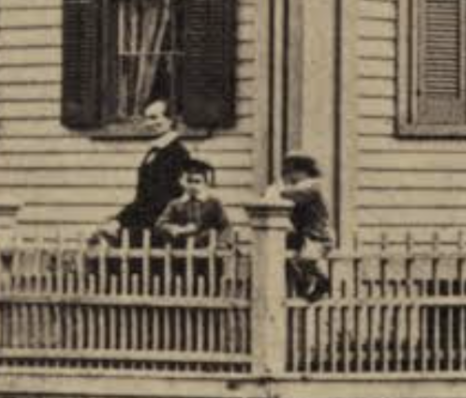
The Lincoln Home was the first and only home Abraham Lincoln owned and still stands today, with much of the original structure, walls, and foundations remaining. The Lincoln Home in itself in an artifact, as well as a place of stories and memories that tell the stories of Abraham Lincoln and his family. It's growth and expansion mirrors the growth of the Lincoln family from a young couple with a baby to a presidential family bound for the White House, as well as Lincoln's growth from a young lawyer of humble origin to the highest position in the United States. In 1839, a small, humble, one-and-a-half cottage was constructed at the corner of Eighth and Jackson Streets in Springfield, Illinois. Its first resident, the Reverend Charles Dresser, married a young couple -- Abraham Lincoln and Mary Todd -- in 1843. The following year, Abraham Lincoln purchased this house and moved in with his wife and his first son, Robert Todd. In 1850, the Lincolns suffered their first tragedy when their second son, Eddie, died just before his fourth birthday. The following year, they celebrated the birth of their third son Willie, and two years later their fourth and final child, Thomas (nicknamed Tad) was born. With a growing family, the Lincolns expanded their house by adding a full second floor by 1856. In addition to Abraham, Mary, and the children, sometimes individuals who were hired to help with chores and tasks around the house also lived in the Lincoln Home. These individuals, often young women, are known as the "hired girls." These girls did everything from cooking, cleaning, and serving to childcare and laundry. Mariah Vance worked in the Lincoln Home for 10 years, the longest of any hired help in the Lincoln Home.


SITE
930 E Monroe St,
Springfield, IL 62701
217-544-8695
Mon - Fri, 10am - 4pm
Free
HISTORY
On February 11, 1861, Lincoln gave a particularly emotional farewell address upon leaving Springfield; he would never again return to Springfield alive. Lincoln traveled east in a special train. Due to secessionist plots, a then-unprecedented attention to security was given to him and his train. En route to his inauguration, Lincoln addressed crowds and legislatures across the North. The president-elect evaded suspected assassins in Baltimore. He traveled in disguise, wearing a soft felt hat instead of his customary stovepipe hat and draping an overcoat over his shoulders while hunching slightly to conceal his height. His friend Congressman Elihu B. Washburne recognized him on the platform upon arrival and loudly called out to him. On February 23, 1861, he arrived in Washington, D.C., which was placed under substantial military guard.
"My friends, no one, not in my situation, can appreciate my feeling of sadness at this parting. To this place, and the kindness of these people, I owe everything. Here I have lived a quarter of a century, and have passed from a young to an old man. Here my children have been born, and one is buried. I now leave, not knowing when, or whether ever, I may return, with a task before me greater than that which rested upon Washington. Without the assistance of the Divine Being who ever attended him, I cannot succeed. With that assistance I cannot fail. Trusting in Him who can go with me, and remain with you, and be everywhere for good, let us confidently hope that all will yet be well. To His care commending you, as I hope in your prayers you will commend me, I bid you an affectionate farewell."
SITE
39.800278, -89.648056
1 S Old State Capitol Plaza,
Springfield, IL 62701
HISTORY
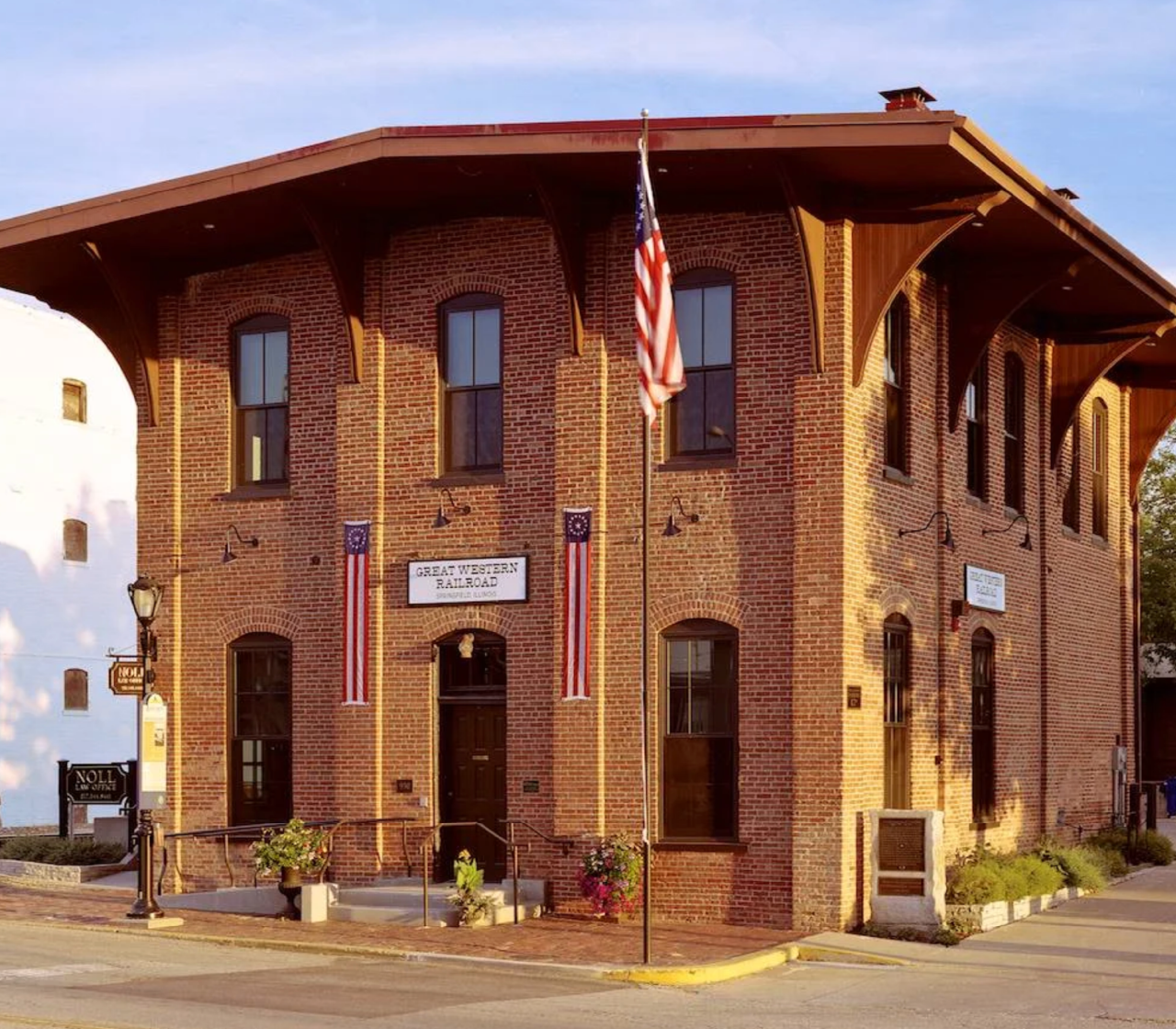
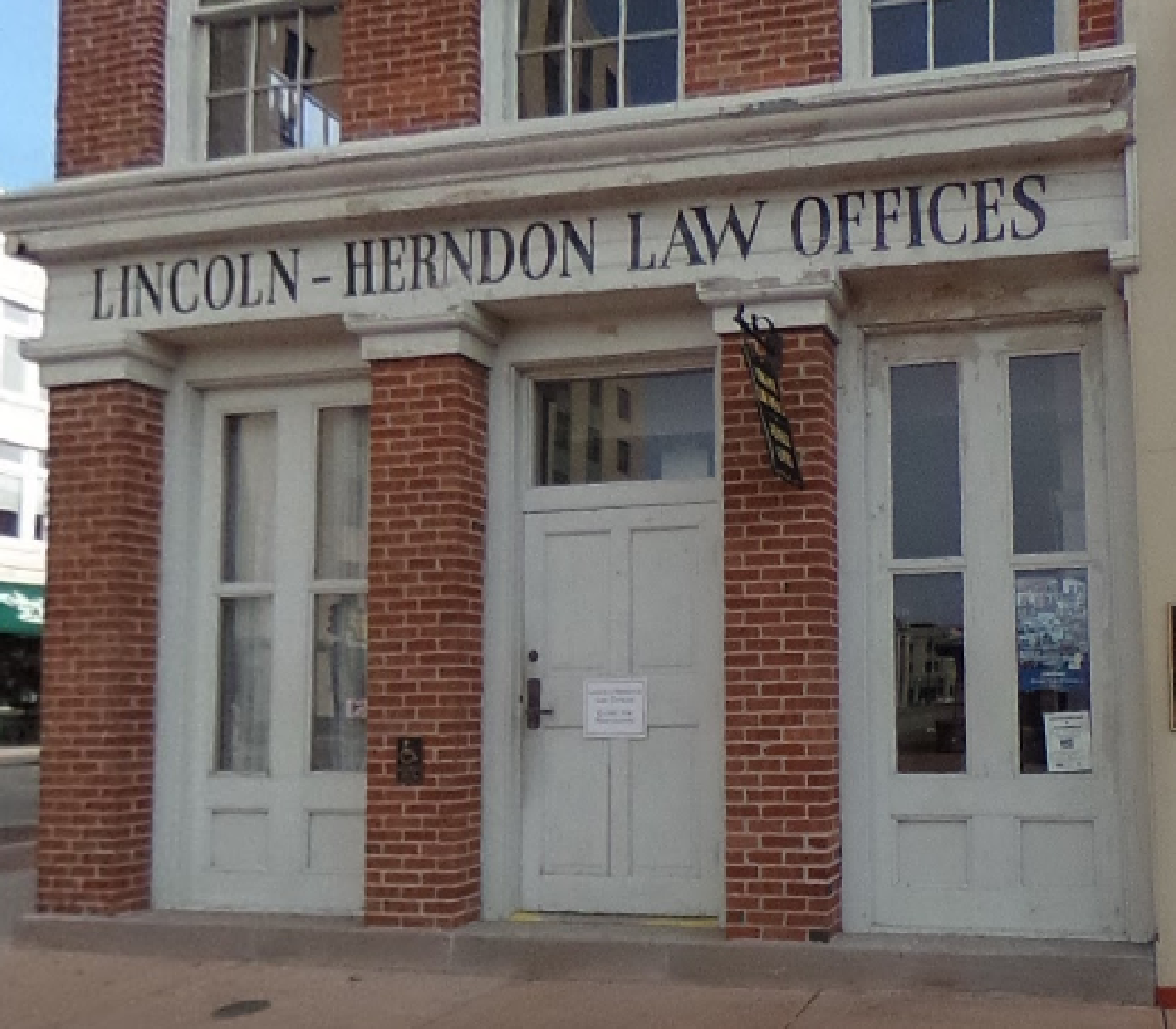
Lincoln was admitted to the Illinois bar on September 9, 1836, and moved to Springfield and began to practice law under John T. Stuart, Mary Todd's cousin. Lincoln emerged as a formidable trial combatant during cross-examinations and closing arguments. He partnered several years with Stephen T. Logan, and in 1844, began his practice with William Herndon, "a studious young man". In his Springfield practice, Lincoln handled "every kind of business that could come before a prairie lawyer". Twice a year he appeared for 10 consecutive weeks in county seats in the Midstate county courts; this continued for 16 years. Lincoln handled transportation cases in the midst of the nation's western expansion, particularly river barge conflicts under the many new railroad bridges. As a riverboat man, Lincoln initially favored those interests, but ultimately represented whoever hired him. He later represented a bridge company against a riverboat company in Hurd v. Rock Island Bridge Company, a landmark case involving a canal boat that sank after hitting a bridge. In 1849 he received a patent for a flotation device for the movement of boats in shallow water. The idea was never commercialized, but it made Lincoln the only president to hold a patent. Lincoln appeared before the Illinois Supreme Court in 175 cases; he was sole counsel in 51 cases, of which 31 were decided in his favor. From 1853 to 1860, one of his largest clients was the Illinois Central Railroad. His legal reputation gave rise to the nickname "Honest Abe."

SITE
526 E Adams St,
Springfield, IL 62701
HISTORY
The debate over the status of slavery in the territories exacerbated sectional tensions between the slave-holding South and the North, and the Compromise of 1850 failed to defuse the issue. In the early 1850s, Lincoln supported efforts for sectional mediation, and his 1852 eulogy for Henry Clay focused on the latter's support for gradual emancipation and opposition to "both extremes" on the slavery issue. As the 1850s progressed, the debate over slavery in the Nebraska Territory and Kansas Territory became particularly acrimonious, and Senator Stephen A. Douglas of Illinois proposed popular sovereignty as a compromise measure; the proposal would take the issue of slavery out of the hands of Congress by allowing the electorate of each territory to decide the status of slavery themselves. The proposal alarmed many Northerners, who hoped to stop the spread of slavery into the territories. Despite this Northern opposition, Douglas's Kansas–Nebraska Act narrowly passed Congress in May 1854.
For months after its passage, Lincoln did not publicly comment on the Kansas–Nebraska Act, but he came to strongly oppose it. On October 16, 1854, in his "Peoria Speech", Lincoln declared his opposition to slavery, which he repeated en route to the presidency. Speaking in his Kentucky accent, with a very powerful voice, he said the Kansas Act had a "declared indifference, but as I must think, a covert real zeal for the spread of slavery. I cannot but hate it. I hate it because of the monstrous injustice of slavery itself. I hate it because it deprives our republican example of its just influence in the world ..." Lincoln's attacks on the Kansas–Nebraska Act marked his return to political life. Nationally, the Whigs were irreparably split by the Kansas–Nebraska Act and other efforts to compromise on the slavery issue. Reflecting the demise of his party, Lincoln would write in 1855, "I think I am a Whig, but others say there are no Whigs, and that I am an abolitionist [...] I do no more than oppose the extension of slavery." Drawing on the antislavery portion of the Whig Party, and combining Free Soil, Liberty, and antislavery Democratic Party members, the new Republican Party formed as a northern party dedicated to antislavery. Lincoln resisted early attempts to recruit him to the new party, fearing that it would serve as a platform for extreme abolitionists. Lincoln also still hoped to rejuvenate the ailing Whig Party, though he bemoaned his party's growing closeness with the nativist Know Nothing movement.
In the 1854 elections, Lincoln was elected to the Illinois legislature but declined to take his seat. In the aftermath of the elections, which showed the power and popularity of the movement opposed to the Kansas–Nebraska Act, Lincoln instead sought election to the United States Senate. At that time, senators were elected by the state legislature. After leading in the first six rounds of voting, but unable to obtain a majority, Lincoln instructed his backers to vote for Lyman Trumbull. Trumbull was an antislavery Democrat, and had received few votes in the earlier ballots; his supporters, also antislavery Democrats, had vowed not to support any Whig. Lincoln's decision to withdraw enabled his Whig supporters and Trumbull's antislavery Democrats to combine and defeat the mainstream Democratic candidate, Joel Aldrich Matteson.
In part due to the ongoing violent political confrontations in the Kansas, opposition to the Kansas–Nebraska Act remained strong in Illinois and throughout the North. As the 1856 elections approached, Lincoln abandoned the defunct Whig Party in favor of the Republicans. He attended the May 1856 Bloomington Convention, which formally established the Illinois Republican Party. The convention platform asserted that Congress had the right to regulate slavery in the territories and called for the immediate admission of Kansas as a free state. Lincoln gave the final speech of the convention, in which he endorsed the party platform and called for the preservation of the Union.[26] At the June 1856 Republican National Convention, Lincoln received significant support on the vice presidential ballot, though the party nominated a ticket of John C. Frémont and William Dayton. Lincoln strongly supported the Republican ticket, campaigning for the party throughout Illinois. The Democrats nominated former Ambassador James Buchanan, who had been out of the country since 1853 and thus had avoided the debate over slavery in the territories, while the Know Nothings nominated former Whig President Millard Fillmore. In the 1856 elections, Buchanan defeated both his challengers, but Frémont won several Northern states and Republican William Henry Bissell won election as Governor of Illinois. Though Lincoln did not himself win office, his vigorous campaigning had made him the leading Republican in Illinois.
SITE
Museum
212 N. Sixth St.,
Springfield, IL 62701
Library
112 N. Sixth St.,
Springfield, IL 62701
NOTABLE PIECES
PM - TOMB
SITE
Oak Ridge Cemetery
1500 Monument Ave,
Springfield, IL 62702
217-782-2717
Daily 9am - 5pm
Parking - Free, adjacent to the tomb, just to the west of the custodian's residence
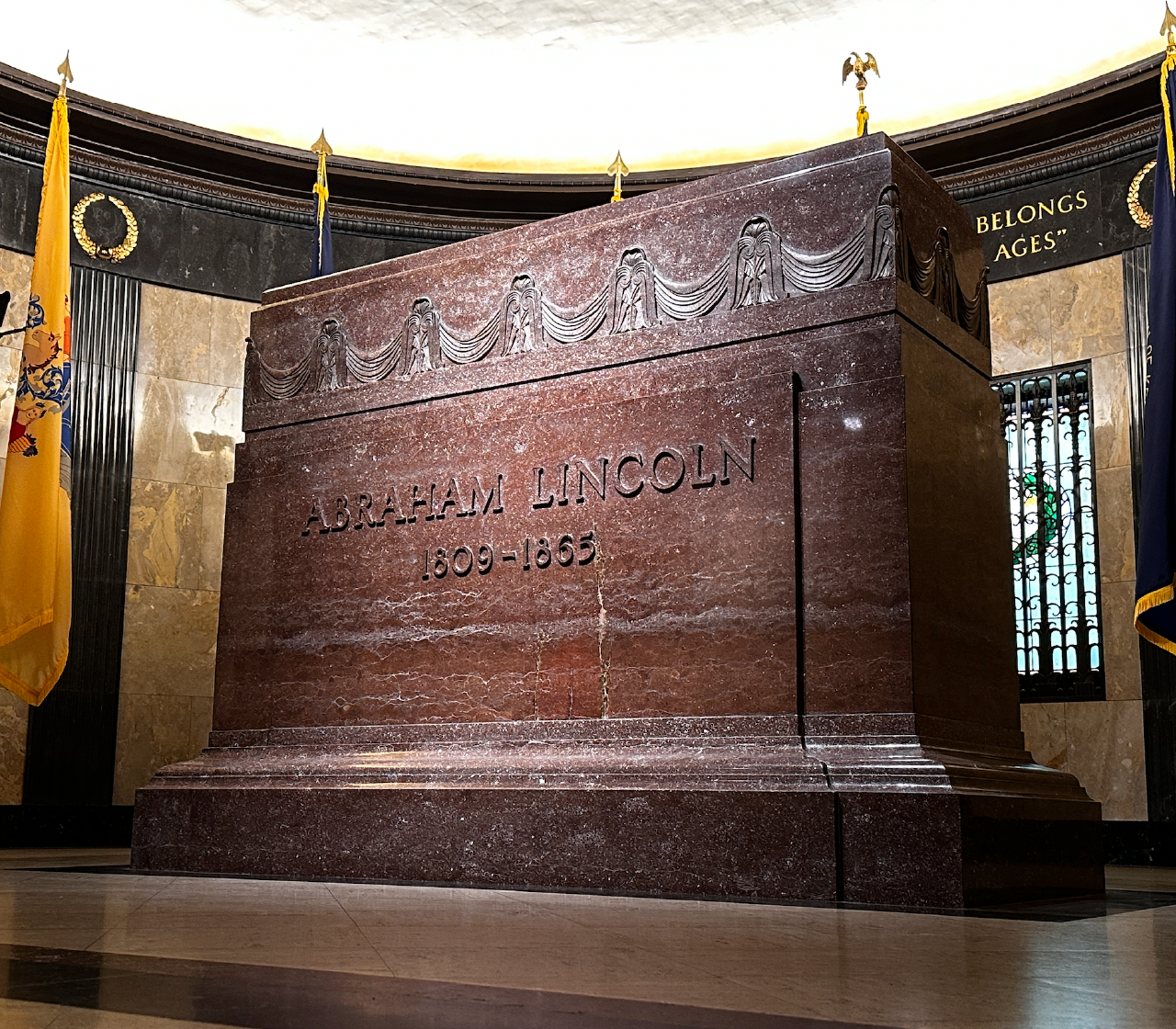
From a design submitted by sculptor Larken G. Mead, Lincoln’s Tomb was constructed from 1869-1874 at a cost of $180,000 ($4,960,657.89 in 2024). Due to uneven settling of the earth under the tomb, a complete reconstruction of the Tomb was started in 1901 by the local Culver Stone Company. Following this reconstruction, President Lincoln’s son Robert Todd requested that his father’s body be placed in a specially designed steel and concrete vault beneath the floor of the burial chamber. Again, due to external and internal deterioration, a Second Reconstruction began again in 1930 with a complete remodel of the interior. President Herbert Hoover delivered the dedicatory address.
HISTORY
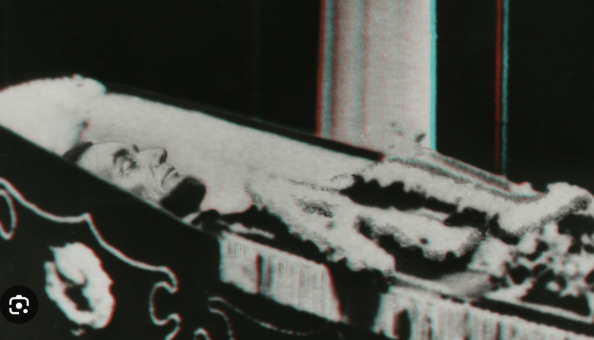
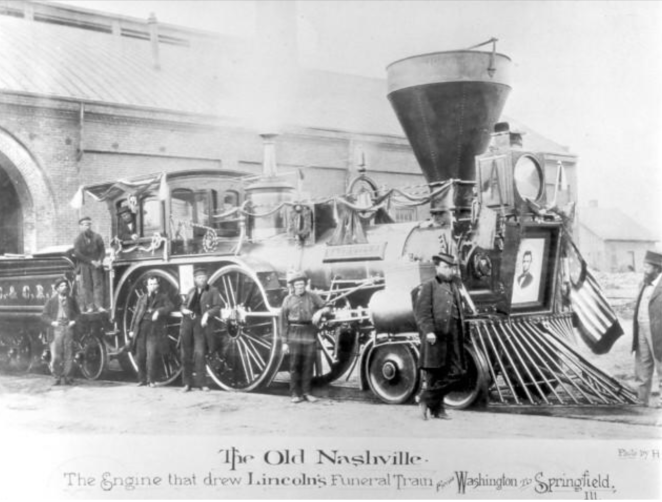
After Abraham Lincoln was assassinated on April 14, 1865, a three-week series of events was held to mourn the death and memorialize the life of the 16th president of the United States. Funeral services, a procession, and a lying in state were first held in Washington, D.C., then a funeral train transported Lincoln's remains 1,654 miles (2,662 km) through seven states for burial in Springfield, Illinois. Never exceeding 20 mph, the train made several stops in principal cities and state capitals for processions, orations, and additional lyings in state. Many Americans viewed the train along the route and participated in associated ceremonies.
The train left Washington, D.C., on April 21 at 12:30 pm. It bore Lincoln's eldest son Robert Todd and the remains of Lincoln's younger son, William Wallace Lincoln (1850–1862),[a] but not Lincoln's wife Mary Todd Lincoln, who was too distraught to make the trip.[2] The train largely retraced the route Lincoln had traveled to Washington as the president-elect on his way to his first inauguration, more than four years earlier. The train arrived at Springfield on May 3. Lincoln was interred on May 4, at Oak Ridge Cemetery in Springfield. In every town the train passed or stopped there was always a crowd to pay their respects.
By 1874, several features had been added to the Lincoln Tomb, including a 117-foot (36 m)-tall granite obelisk surrounded with several bronze statues of Lincoln and soldiers and sailors. Mary Todd Lincoln and three of their four sons—Willie, Eddie, and Tad—are also buried there.[b] Today, it is owned and managed as a state historic site and is a National Historic Landmark.