


Kansas City,
Kansas / Missouri
HISTORY - BLEEDING KANSAS

Featuring - John Brown, James Montgomery
The Kansas-Nebraska Act
One of the most divisive pieces of legislation in American history, the Kansas-Nebraska Act significantly heightened the growing sectional conflict of the 1850s and effectively destroyed the Whig Party. Having established the principle of "popular sovereignty" as the vehicle for establishing the slave status of the southwestern territories in the Compromise of 1850, the Democratic Party sought an opportunity to extend that policy into the rest of the American West. In 1854, the Senate Committee on the Territories, headed by Stephen A. Douglas, proposed creation of two new territories, Kansas and Nebraska, and declared the territories' slave status would be determined through popular sovereignty. This effectively revoked the Missouri Compromise but Douglas believed it would ultimately solve the sectional crisis by unifying the nation behind the concept of popular sovereignty and in the establishment of a continental railroad that would go through the new territories. The bill passed the Senate by a large majority but passed the House of Representatives by only thirteen votes. Franklin Pierce signed it into law on May 30. The failure of Douglas's vision became immediately apparent, as violence and corruption dominated the Kansas Territory's slavery vote and resulted in a period of extended conflict in that area, known generally as Bleeding Kansas. Support for the act also permanently destroyed the already-fragile second party system by forcing politicians to favor sectional interests over party loyalty. The Democrats were able to survive the crisis but became increasingly divided between northern and southern members. The Whigs, on the other hand, split geographically and ceased to be a national party. The Kansas-Nebraska Act is also noteworthy for motivating Abraham Lincoln to return to politics after a period of disaffection and eventually join the Republican Party. The Republicans were, in part, founded specifically to oppose the act.
The term “Bleeding Kansas” describes a series of political and violent confrontations that wracked the Kansas Territory between passage of the Kansas-Nebraska Act in 1854 and the outbreak of the Civil War in 1861. The conflict centered on the question of whether or not slavery would be legal in the territory. The fighting did not technically end with the onset of the Civil War but simply became part of the broader conflict and even continued, to a lesser extent, after the Confederacy’s collapse.
With the imposition of “popular sovereignty” on the Kansas Territory by the Kansas-Nebraska Act, pro-slavery advocates began entering and settling there to increase its slaveholding population and thereby guarantee the legality of slavery once the issue came to a vote. Slaveholding Missourians were particularly active in these efforts, as they considered the slave status of their state particularly vulnerable. To counter this, anti-slavery advocates began sponsoring immigration by non-slaveholders into Kansas. Thus, several settlements developed within the territory of a strictly pro- or anti-slavery nature. In addition, organizations within and outside of Kansas began arming these emigrants and sponsoring militias.
The extent of this crisis became immediately apparent in 1854, when the territory elected its first congressional delegate. Pro-slavery Missourians flooded into the territory and elected a like-minded candidate with less than half of the total votes cast coming from actual Kansas residents. This phenomenon occurred again the following year during the first election for the territorial legislature. The elected legislature began meeting in Shawnee Mission along the Missouri border and set about passing laws to entrench slavery in Kansas. Soon, a shadow anti-slavery legislature began meeting in Topeka and drafted their own state constitution, which President Franklin Pierce declared illegal. In 1856, the U.S. Congress officially investigated the 1855 vote and found it to be extraordinarily corrupt.
Organized violence had already begun to break out in 1855 but the first nationally noteworthy incident occurred on May 21, 1856, when a group of pro-slavery “Border Ruffians” sacked the anti-slavery stronghold of Lawrence. The following day, Congressman Preston S. Brooks caned Senator Charles Sumner in the U.S. Senate chamber following the latter’s speech, “The Crime Against Kansas.” In reaction to these two events, John Brown—a radical abolitionist who had migrated to Kansas the previous year—and a group of followers brutally murdered five pro-slavery men in Pottawatomie Creek. Following these incidents, both sides began organizing more extensively and formed small irregular armies comprised of men from inside and outside of Kansas. These guerilla units engaged in several skirmishes until the Civil War when they transitioned into regular and irregular Union and Confederate forces.
Amidst this heightening violence, the territorial legislature officially relocated to Lecompton and Pierce dispatched federal forces to break-up the competing Topeka government. In 1857, a constitutional convention was held at Lecompton, resulting in a pro-slavery state constitution. Anti-slavery Kansans boycotted the ratification vote but President James Buchanan approved the document and Kansas’ statehood nevertheless. However, Republicans and Democrats led by Stephen A. Douglas overturned Buchanan’s decision, creating rifts in the Democratic Party that would not heal until after the Civil War. A second ratification vote was held which pro-slavery voters boycotted, resulting in the defeat of the Lecompton Constitution. Another constitutional convention was held in 1859, which produced the largely anti-slavery Wyandotte Constitution. Kansans ratified it by a large margin and it became the governing document after Kansas achieved statehood on January 29, 1861.


Civil War Muse - Bleeding Kansas
Travel KS - History
NPS - History
Wikipedia
DAY 1 - BLEEDING KANSAS DRIVING TOUR WEST
6 Sites
35.4 miles
49 minutes (drive / walk time)
Locations:
SITE
Visitors Center Address:
SW 8th &, SW Van Buren St,
Topeka, KS 66612
Mon - Fri 8am-5pm
Sat 10am-4pm
Parking - underground, entrance on 8th Ave. btw Harrison and Van Buren
Guided Historic Tours
Monday - Friday: 9 and 11 a.m. and 1 and 3 p.m.
Saturday: 10 and 11 a.m., 1,2, and 3 p.m.
Reservations not needed for groups <10 people
Guided Dome Tours
Mon - Fri - 9:15, 10:15, and 11:15 am.; 1:15, 2:15, and 3:15 p.m.
Sat: 10:15 and 11:15 a.m.; 1:15, 2:15, and 3:15 p.m.
KS Capitol - PDF Map
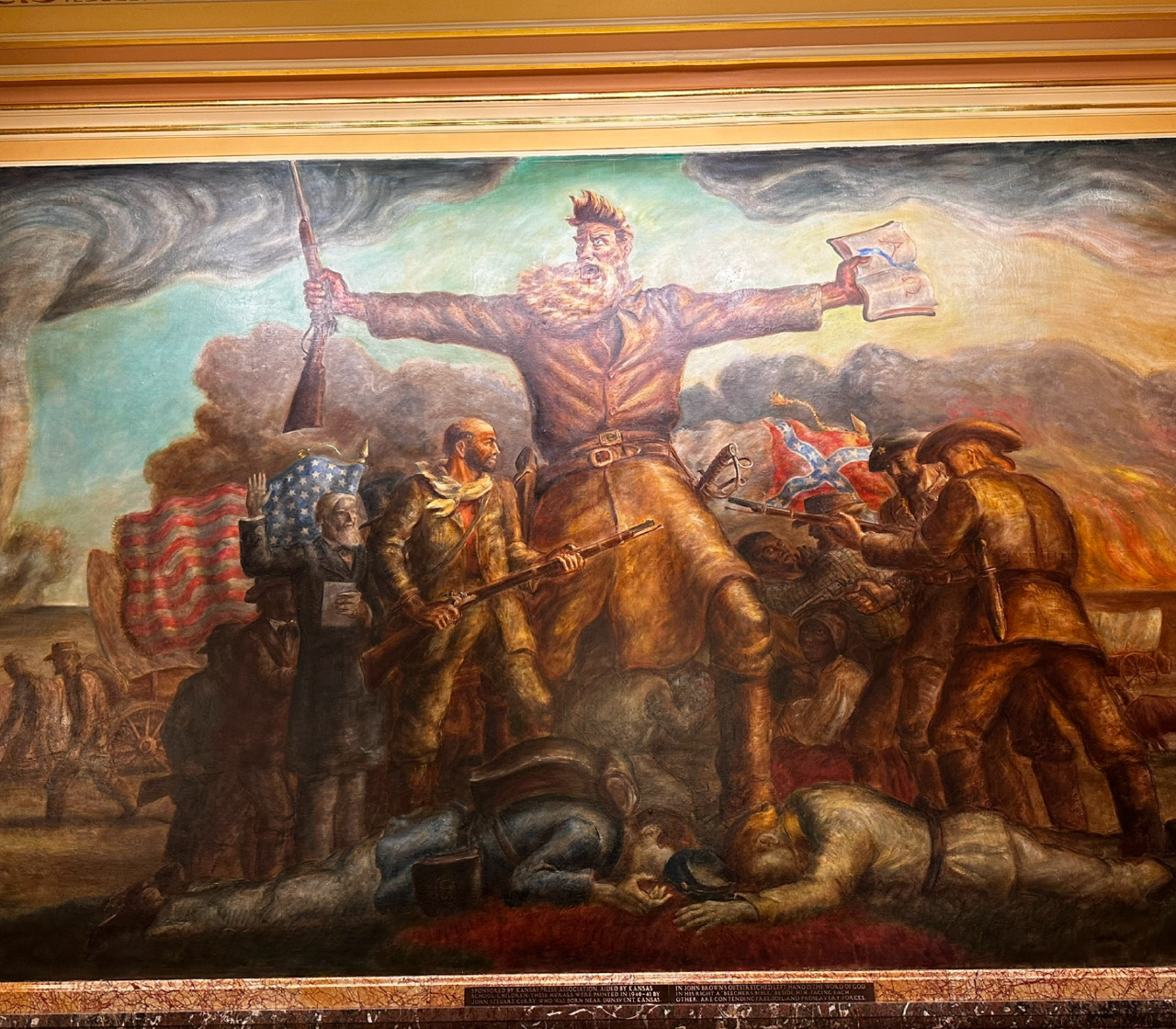
Curry murals - 2nd Floor
HISTORY

In response to the March elections that elected The Bogus Legislature, free-state leaders held the Topeka Constitutional Convention in October of 1855. The resulting constitution was approved by free-state voters on December 15, 1855. This constitution called for elections which free-state leaders held on January 15, 1856. The free-state legislature met in Topeka on March 4, 1856. This was the election in which Charles Robinson was elected as territorial governor. The President of the United States, Franklin Pierce, called the Free State Legislature unlawful and called for the arrest of its leaders. The President ended up sending Federal troops to Leavenworth in the Kansas Territory.
When the elected members of the free-state government took their oaths of office in Topeka in March, Douglas County Sheriff Samuel J. Jones recorded their names. Everyone expected Jones to arrest them for treason. This would happen later during and immediately following the Sack of Lawrence. The Topeka government persevered and sent James H. Lane to Washington with a petition to the US Congress asking for the admission of Kansas into the Union as a free state. There were many irregularities in the documents, and the debate in congress was heated. Illinois Senator Stephen Douglas attacked the petition as fraudulent. Senator William Seward argued in support of admitting Kansas as a free state. The debate was so virulent that James Lane went so far to challenge Senator Douglas to a duel. Douglas refused to accept the challenge.
NOTABLE PIECES
Tragic Prelude, 1942
John Steuart Curry
SITE
319 Elmore St,
Lecompton, KS 66050
785-887-6520
Wed - Sat 9am-5pm
Free
HISTORY

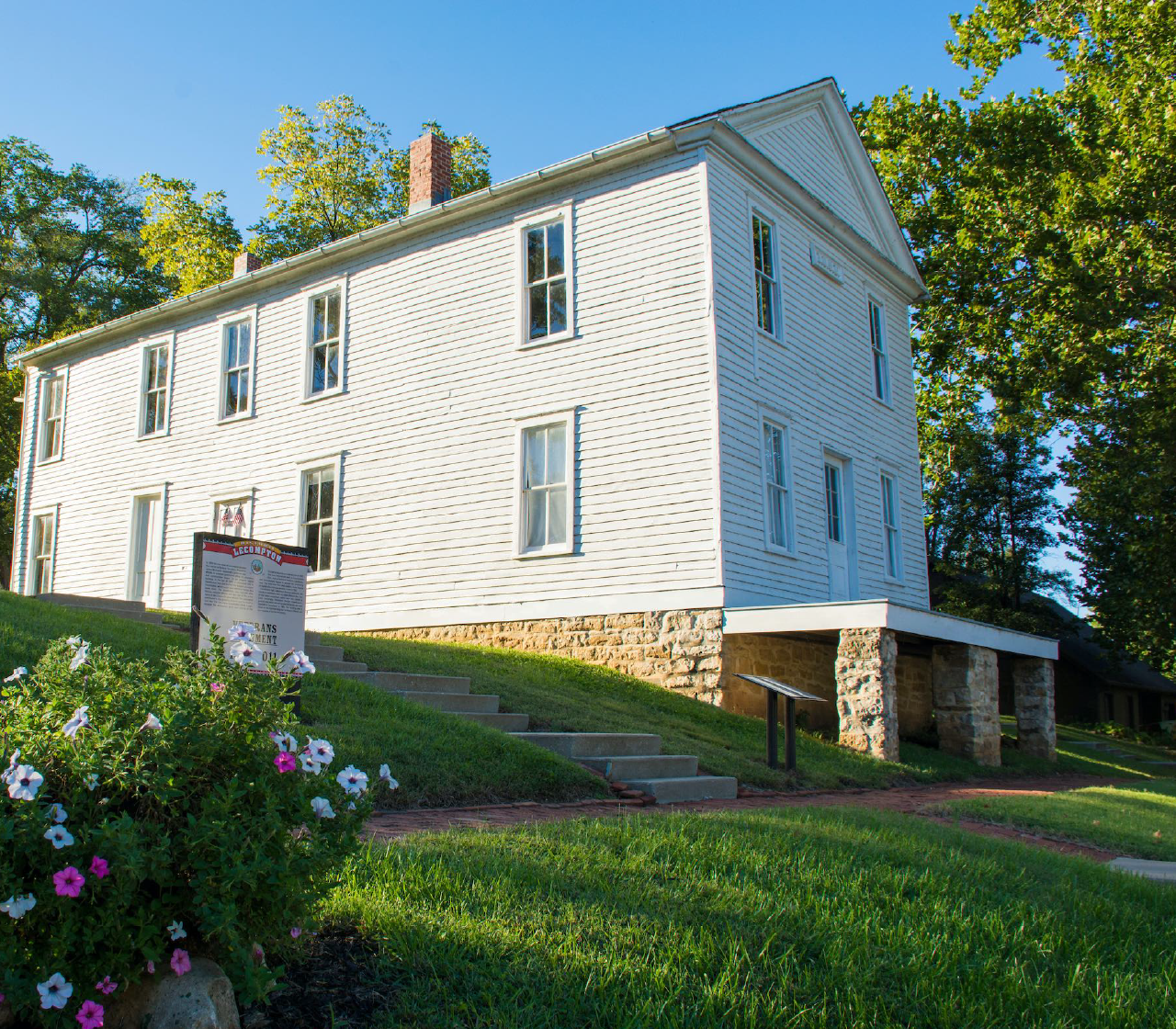
In the fall of 1857 a convention met in Constitution Hall and drafted the famous Lecompton Constitution, which would have admitted Kansas as a slave state. The constitution was rejected after intense national debate and was one of the prime topics of the 1858 Lincoln-Douglas Illinois U.S. Senate debates. The controversy contributed to the growing dispute soon to erupt in civil war. The Lecompton Constitution failed, in part, because the antislavery party won control of the territorial legislature in the election of 1857.
The new legislature met at Constitution Hall and immediately began to abolish the pro-slavery laws. The victorious free-state leaders chose Topeka as capital when Kansas became a state in 1861.
The 1857 proslavery Lecompton Constitution written inside Constitution Hall caused much bitter and acrimonious debate in Kansas Territory, in the country and in the U.S. Congress when a brawl broke out in the U.S. House chamber late one evening as this constitution was being debated. The Lecompton Constitution paralyzed the country, the Congress and the presidency of James Buchanan. Buchanan’s Democratic Party would eventually splinter into southern and northern wings over this constitution and the Democratic Party would field three candidates in the 1860 presidential campaign while the new, united, northern Republican Party and its single candidate Abraham Lincoln would capture the presidency with just 39% of the popular vote. The election of Lincoln, the secession of the southern states opened the door for Kansas’ admission as a free state on January 29, 1861 and hastened the country toward civil war.
The happenings in the Kansas Territory and in Constitution Hall caused a rupture in the relations of the North and South. There was constant conflict between the pro-slavery and free-state factions. Lecompton was considered the center of the pro-slavery movement, which of course was unsuccessful. Kansas entered the Union on January 29, 1861, as a free state, and the Civil War began.
SITE
Coordinates - 38.973283, -95.239217
HISTORY
The Sacking of Lawrence

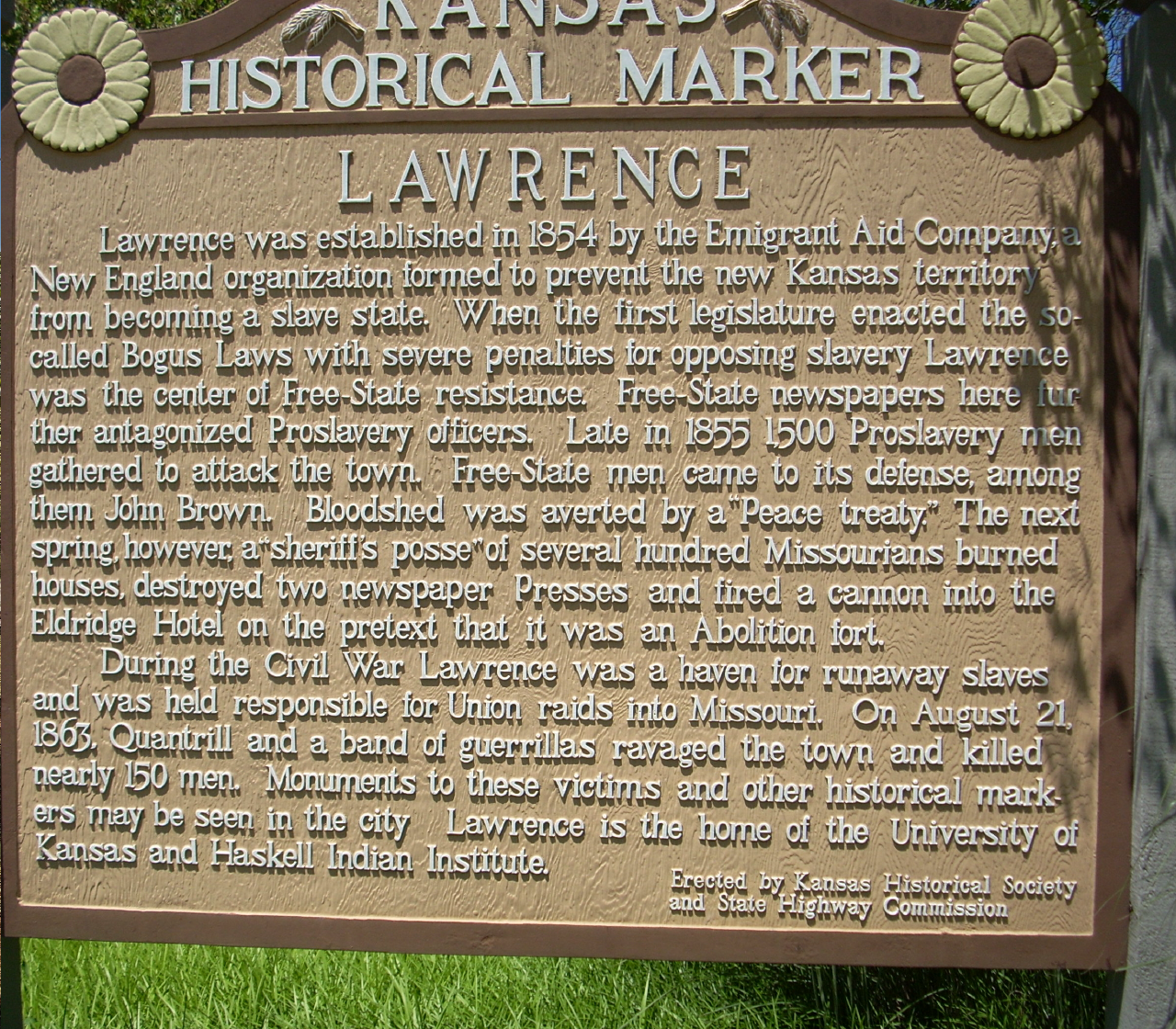
The sacking of Lawrence occurred on May 21, 1856, when pro-slavery settlers, led by Douglas County Sheriff Samuel J. Jones, attacked and ransacked Lawrence, Kansas, a town that had been founded by anti-slavery settlers from Massachusetts who were hoping to make Kansas a free state. The incident fueled the irregular conflict in Kansas Territory that later became known as Bleeding Kansas. The human cost of the attack was low: only one person—a member of the pro-slavery gang—was killed, and his death was accidental. However, Jones and his men halted production of the Free-State newspapers the Kansas Free State and the Herald of Freedom, destroying the presses and offices (with the former ceasing publication altogether and the latter taking months to once again start up). The pro-slavery men also destroyed the Free State Hotel and Charles L. Robinson's house.
SITE
Coordinates - 38.971717, -95.235833
635-699 Massachusetts St,
Lawrence, KS 66044
HISTORY
You are standing near the site of the Kansas Free State Press, one of the Lawrence newspapers targeted by Missourians during the Sack of Lawrence.
SITE
N38 58.268 W95 14.157
38.971133, -95.235950
701-705 Massachusetts St,
Lawrence, KS 66044
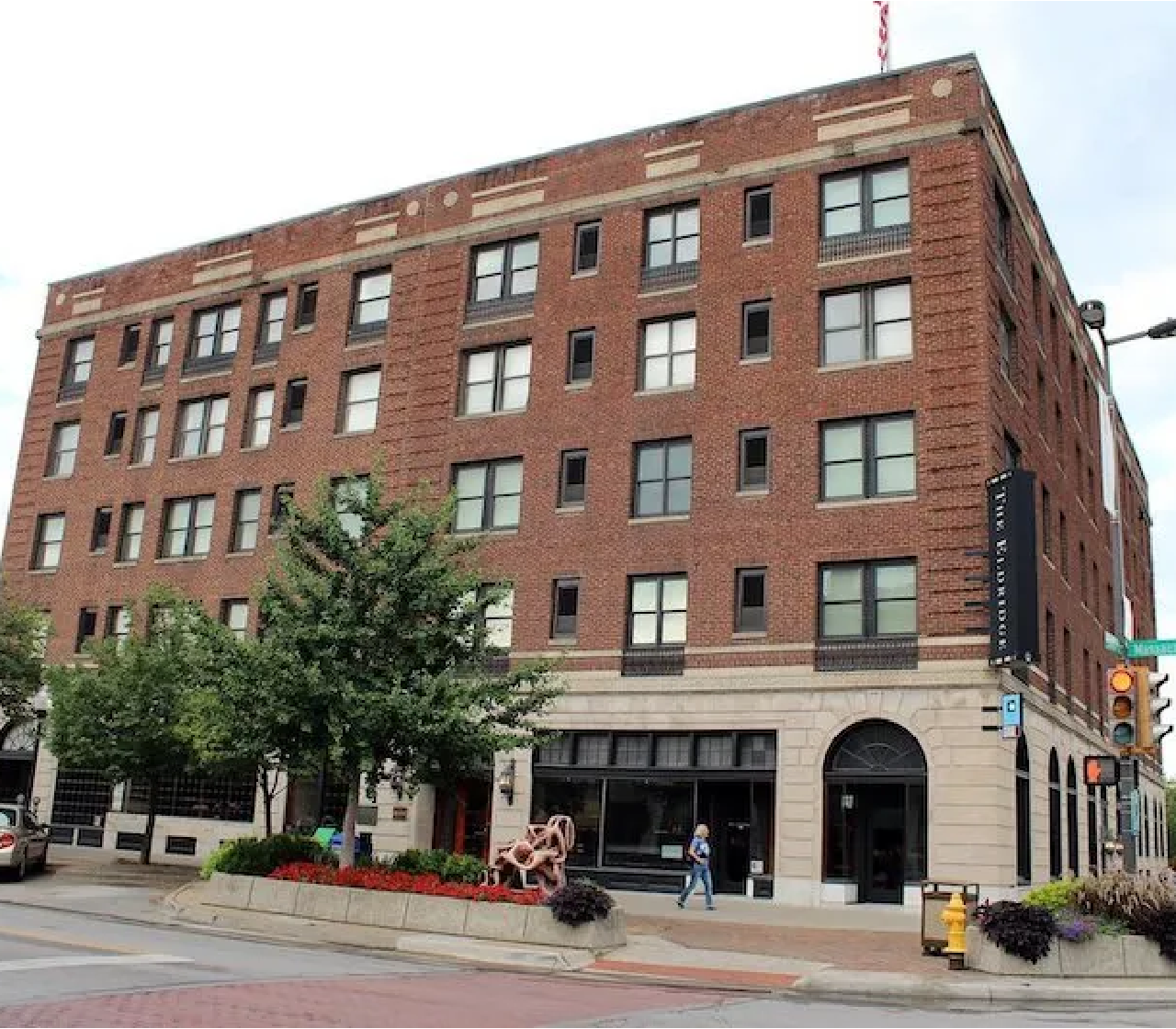
Site of the destroyed Free State Hotel is currently occupied by the Eldridge Hotel.
HISTORY
Built in 1855 by agents from the New England Emigrant Aid Society, the Free State Hotel was needed to provide temporary housing for Free-State supporters arriving in the Kansas Territory.
SITE
1047 Massachusetts St.
Lawrence, KS 66044
Tuesday-Saturday: 10am-4pm
Monday-Sunday: CLOSED
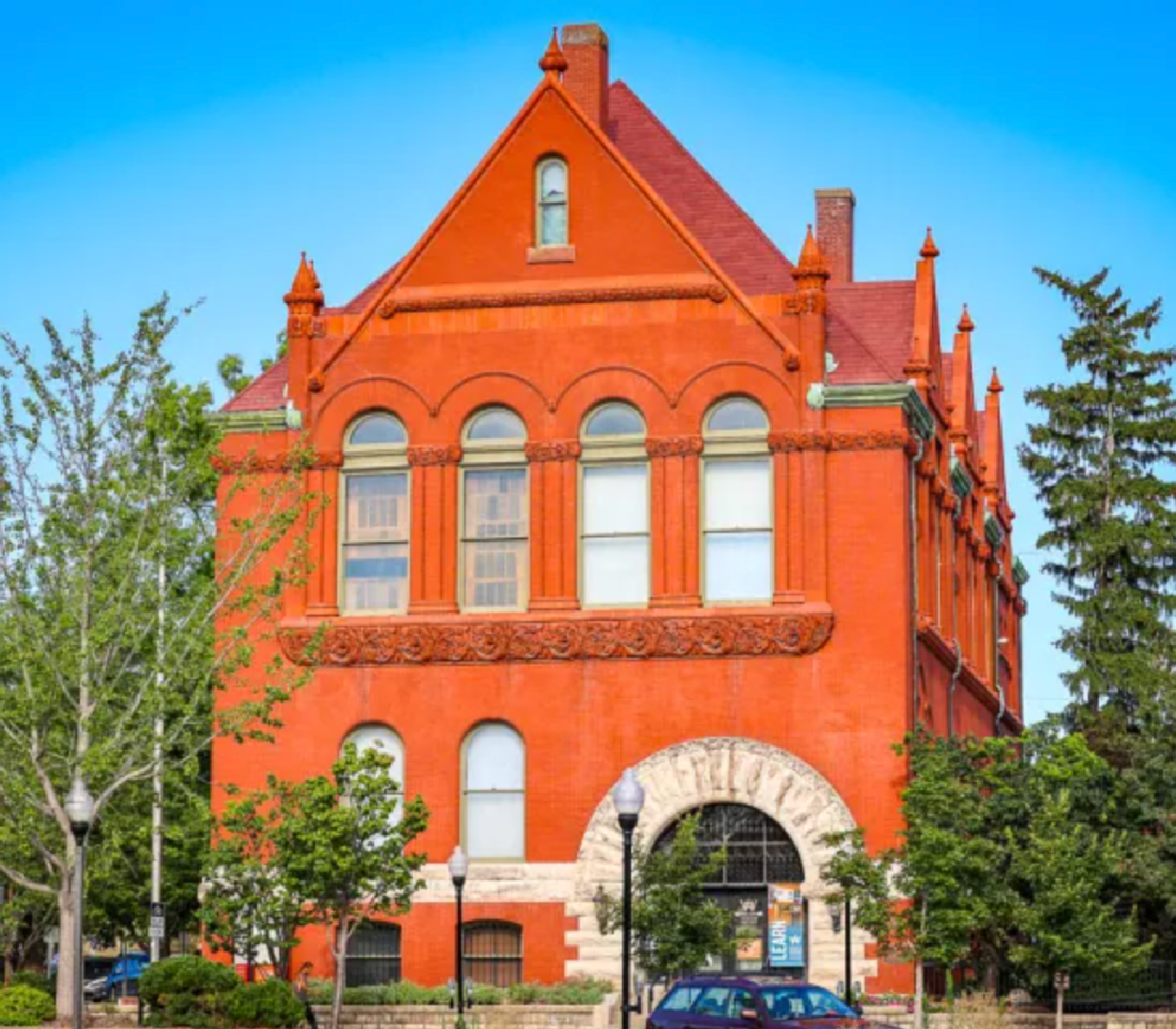
Artifacts and interactives related to Bleeding Kansas, Quantrill’s Raid during the Civil War, and the fight against slavery
HISTORY
Quantrill's Raid / Lawrence Massacre

The Lawrence Massacre (also known as Quantrill's Raid) was an attack during the American Civil War (1861–65) by Quantrill's Raiders, a Confederate guerrilla group led by William Quantrill, on the Unionist town of Lawrence, Kansas, killing around 150 unarmed men and boys. The attack, on the morning of Friday August 21, 1863, targeted Lawrence due to the town's long support of abolition and its reputation as a center for the Jayhawkers, who were free-state militia and vigilante groups known for attacking plantations in pro-slavery Missouri's western counties.
DAY 2 - BLEEDING KANSAS DRIVING TOUR SOUTH
8 Sites
99.5 Miles
2 hours (drive time)
Locations:
- Wellsville, KS
- Osawatomie, KS
- Lane, KS
- Pleasanton, KS

SITE
Located east of Baldwin City, KS on 56 Hwy at
163 E 2000 Road,
Wellsville, KS 66092
10 Stops
HISTORY
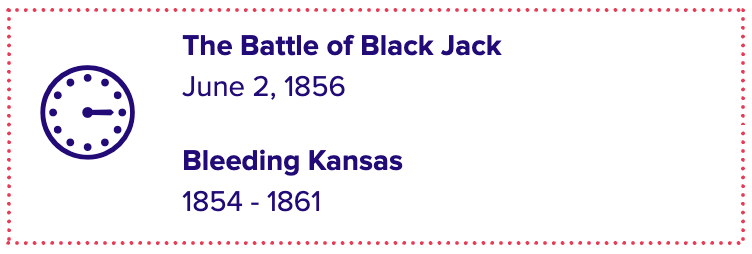
The Battle of Black Jack took place on June 2, 1856, when antislavery forces, led by the noted abolitionist John Brown, attacked the encampment of Henry C. Pate near Baldwin City, Kansas. The battle is cited as one incident of "Bleeding Kansas" and a contributing factor leading up to the American Civil War of 1861 to 1865.

SITE
1907 W 347th St.
Osawatomie, Kansas
This steel structure marks the original location of the Adair Cabin, which served as a home to Samuel and Florella Adair and a headquarters for John Brown during his time in Kansas. The Adairs moved from Ohio to Kansas in 1854, settling in this cabin located one mile west of the town of Osawatomie. In 1912, the Adair Cabin was carefully moved to the center of John Brown Memorial Park, and it is available for public tours from the Kansas State Historical Society.
HISTORY
The simple formation, named the “Ghost Cabin,” was fabricated to the exact dimensions of the original 1854 cabin. An archeological excavation of the Adair Cabin was conducted in 2014, uncovering several artifacts, including a fork labeled with Florella’s initials, “FBA,” and a teacup.
The original location of the Adair Cabin was where Fredrick Brown, John Brown’s son, was killed by a proslavery Baptist minister, Martin White, on August 30, 1856. A marker at the entrance to the driveway of this historic site pays tribute to Frederick Brown. When John Brown received news of his son’s death, he rushed from his camp to protect the town of Osawatomie from the proslavery attackers. Brown and his supporters were greatly outnumbered and eventually fled the battle in an attempt to draw the proslavery men away from the town. Despite Brown’s intention, the proslavery settlers burned the majority of Osawatomie to the ground. However, when a group of proslavery men approached the Adair Cabin, the home was saved in large part because of Florella’s bravery, who insisted that only sick women and children resided inside. Claiming to be “gentlemen,” the proslavery men spared the cabin from the fate suffered by the rest of the buildings in town. In total, five antislavery men, including Fredrick Brown, alongside six pro-slavery men, were killed in the fighting.
In addition to serving as a refuge for John Brown and his supporters, the Adair Cabin also operated as a stop along the Underground Railroad. The Underground Railroad was an interconnected network of people and places that led enslaved peoples along a safe route to freedom in the northern United States, often extending into Canada. The Adair Cabin was included in this secretive network, offering protection for enslaved peoples fleeing from the neighboring proslavery state of Missouri and traveling northward through Kansas.
SITE
Park
10th & Main St.
Osawatomie, KS 66064
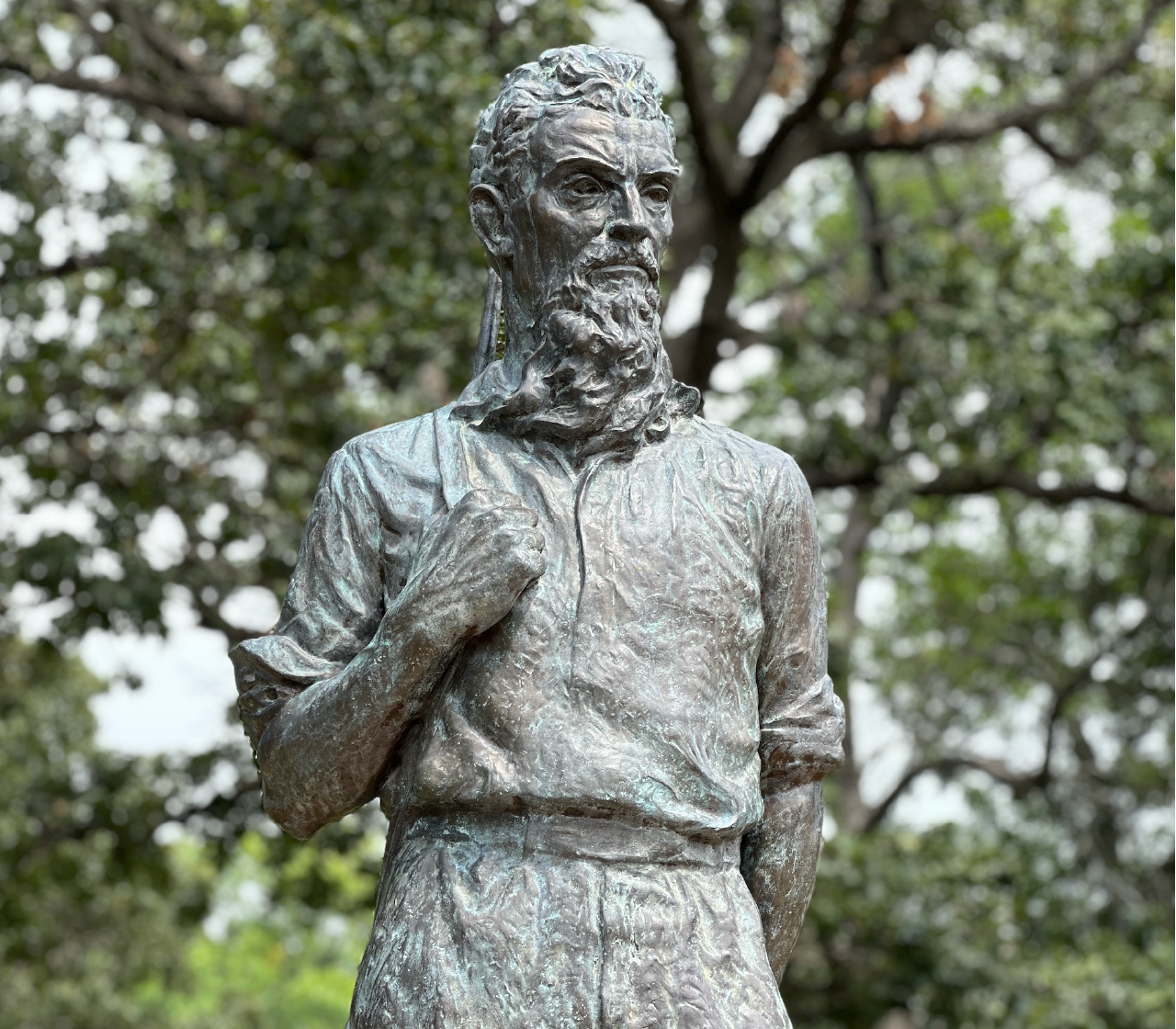
This park commemorates events related to John Brown's actions during the territorial period known as "Bleeding Kansas." While episodes of violence stemming from the political contest between those who supported and opposed the extension of slavery remain the central aspect of historical markers and monuments in this part of Osawatomie, the park also shares the history of area farmers who hoped to avoid the conflict. In 1855, this park was home to a simple log cabin built in 1855 by Samuel Glenn. The cabin was later purchased by Congregational pastor Samuel Adair and his wife Florella--the half-sister of the famous abolitionist John Brown. Several of John Brown's sons joined the Adairs in Kansas during the period of conflict over slavery known as "Bleeding Kansas." The problems his sons were experiencing led to John Brown joining the family in Osawatomie, where he encountered many like-minded anti-slavery settlers eager to rebel against the pro-slavery government.
Battle of Osawatomie Historical Marker - 38° 29.863′ N, 94° 57.525′ W
Marker Page
The Soliders Monument - 38° 29.885′ N, 94° 57.396′ W
Marker Page
Museum
1000 Main St,
Osawatomie, KS 66064
913-755-4384
Tue - Sat, 10am-5pm
John Brown Museum features exhibits in two rooms of the historic Adair cabin, along with displays outside the cabin, which preserves the historic structure in Osawatomie, Miami County. The John Brown Museum is located within the original log cabin of Samuel and Florella Adair, who constructed the building more than 160 years ago. Florella Adair was John Brown's half-sister, and the couple allowed Brown to use this cabin as a safehouse during his time in Kansas Territory. The Adair Cabin was originally located one mile west of the small free-state town of Osawatomie. In 1912, the cabin was relocated here, in the center of John Brown Memorial Park. The park includes several monuments and markers commemorating the Battle of Osawatomie, a violent conflict that erupted on August 30, 1856, between pro-slavery and anti-slavery forces that earned John Brown the famous nickname “Osawatomie Brown.” In 1928, a stone pavilion was erected around the log cabin, protecting the building from destructive weather. In 1995, an arsonist broke into the John Brown Museum and started a fire in the back room. A swift response on behalf of the Osawatomie Fire Department limited the extent of the damage to the floor, two windows, and part of the roof, which were repaired and replaced. Today, the John Brown Museum preserves and shares the history of the Adairs and John Brown, and the Adair Cabin serves as a living artifact of the pre-Civil War era known as Bleeding Kansas.
HISTORY
Samuel and Florella Adair moved to Osawatomie, Kansas, to settle and begin the first Congregational church in the town. Due to advertisement in northern newspapers, several other pioneers arrived as well, hoping to keep the territory anti-slavery. However, with a pro-slavery government and the movement into the area of those from the bordering state of Missouri who favored slavery, the inhabitants of Kansas struggled to find the peace they sought. The well known abolitionist John Brown was half-brother to Florella Adair, and shortly after the Adairs' arrival in Kansas, five of Brown's sons followed the couple. Illness and strife soon had Brown heading to Osawatomie to help his children.
Although John Brown did not intend to stay in Kansas, he did spend 20 months there. Finding a sympathetic ear in the Free-state men of the area, he was able to express his abolitionist ideas. While in Kansas, Brown was a frequent visitor to the cabin. From time to time, he used the cabin as a sort of headquarters from which to conduct his anti-slavery agenda, and it is rumored that the back room of the cabin served a s hide-out for runaway slaves from the south. During this time, Brown and other Kansas settlers engaged in skirmishes over the issue of slavery, particularly against men from the pro-slavery border state of Missouri. In one instance, Osawatomie itself was attacked and burned, however the cabin remained unscathed.
After serving as a Chaplain at Fort Leavenworth during the Civil War, Samuel Adair returned home to Osawatomie. Unfortunately, he lost his wife Florella to illness in 1865. After his death in 1898, the cabin went to his son, Charles Storrs Adair. Fourteen years later, the John Brown cabin was deconstructed and moved to its present location in John Brown Memorial Park- the site of the battle of Osawatomie in which the town was burned. In 1928, a stone surround was built to protect the cabin and ward off further deterioration. Today, the cabin is the site of the John Brown Museum. Visitors can tour the cabin and see the low ceilings and original domestic artifacts belonging to Samuel and Florella Adair.
Battle of Osawatomie

On August 30, 1856, a battle at this location pitted Free State men against those who hoped to extend slavery into Kansas Territory. One of several violent conflicts that led to Kansas Territory's nickname of "Bleeding Kansas" in 1856, this event also spread the fame of anti-slavery warrior John Brown. After pro-slavery men killed his son, and after hearing that they also planned to attack the anti-slavery settlers at Osawatomie, Brown and about thirty men moved to defend the community. Although outnumbered, John Brown's force attacked John Reid and his pro-slavery force of at least 250 "Border Ruffians"-a nickname given by local residents to Missouri men who hoped to extend slavery into the territory by violence and fraud. The battle lasted until Brown's men used most of their ammunition repelling the first wave of attackers. Before Reid could bring his cannon to bear against Brown and his men, the Free State men retreated in different routes to lure the pro-slavery forces away from the city. When the pro-slavery forces could not catch Brown's men, they returned and destroyed most of the town of Osawatomie simply because it was home to many Free State settlers who also opposed the extension of slavery into Kansas.
The Soldiers Monument
The Soldiers Monument was dedicated on August 30, 1877 before an audience of 10,000 people to honor the five Free State men killed in the Battle of Osawatomie on August 30, 1856. The monument is the grave of Frederick Brown, George W. Partridge, David Garrison and Theron Parker Powers. Charles Kaiser's body was never found, but his name appears on the stone. John Brown's name appears on the monument, but his grave is in North Elba, New York.
SITE
Coordinates - 38.455250, -95.084017
4700-4716 Douglas Terrace,
Lane, KS 66042
HISTORY
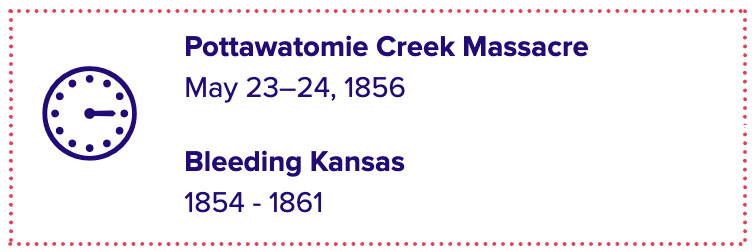
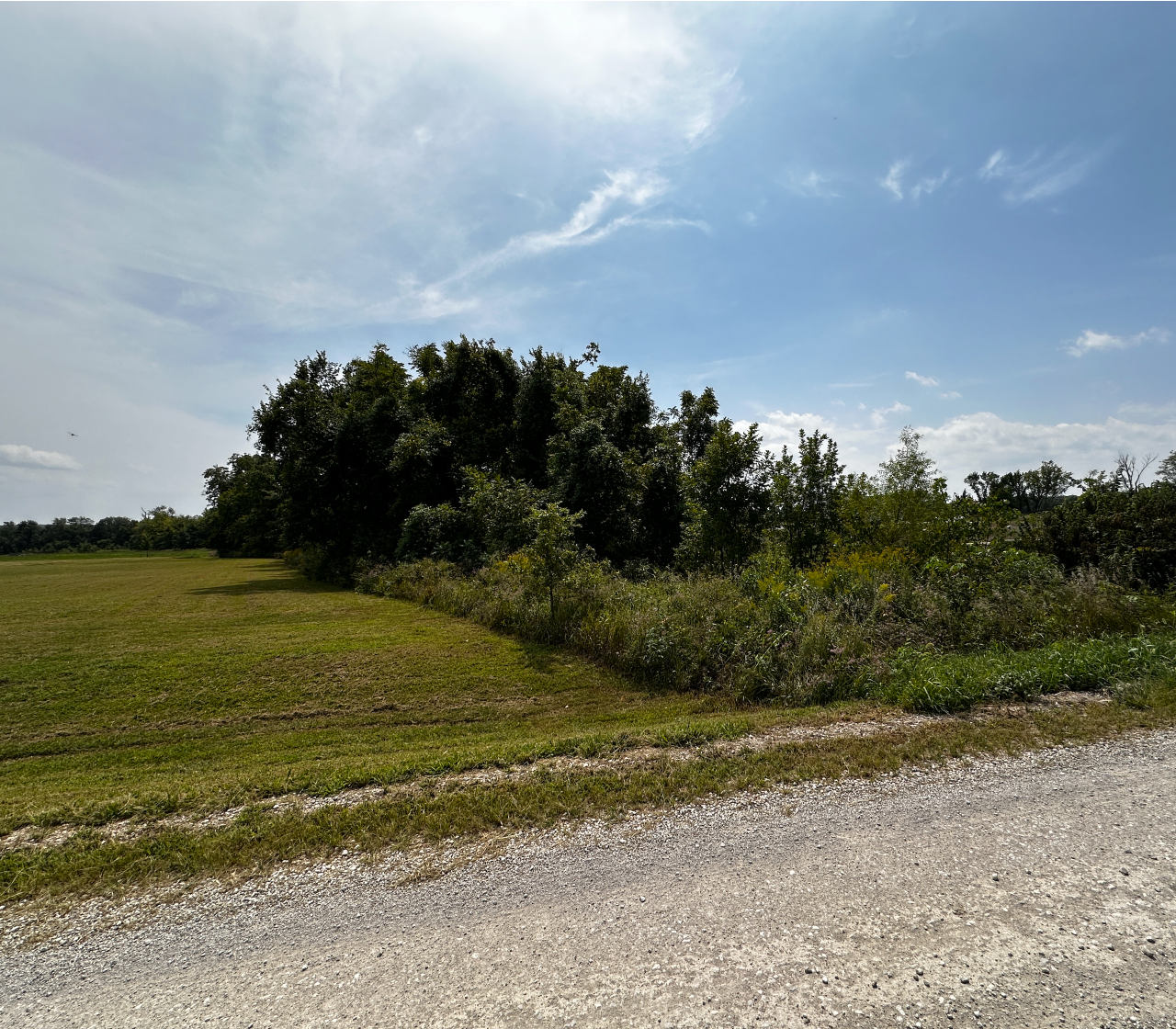
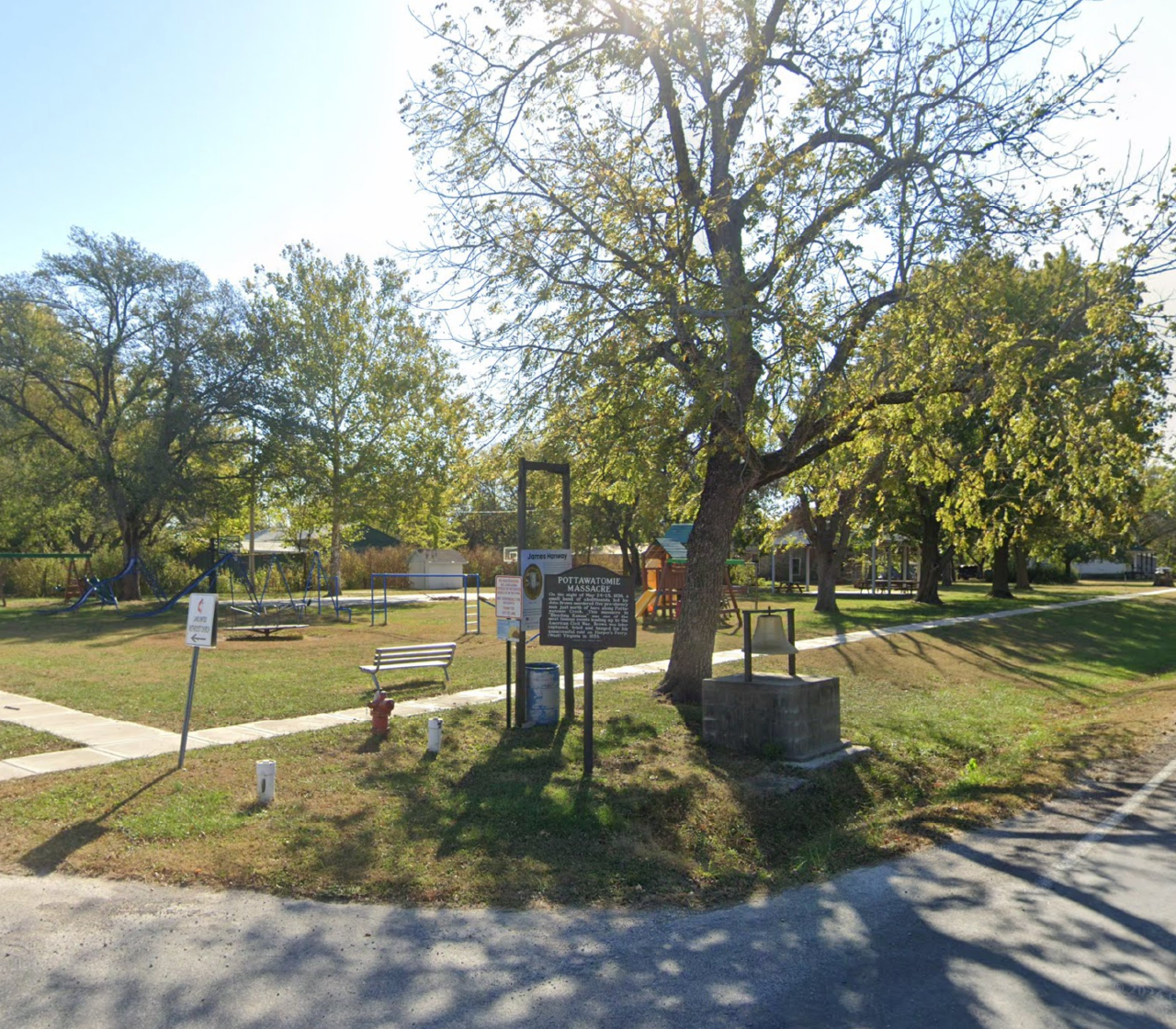
The Pottawatomie massacre occurred on the night of May 24–25, 1856, in the Kansas Territory, United States. In reaction to the sacking of Lawrence by pro-slavery forces on May 21, and the telegraphed news of the severe attack on Massachusetts Senator Charles Sumner, John Brown and a band of abolitionist settlers—some of them members of the Pottawatomie Rifles—responded violently.
Just north of Pottawatomie Creek, in Franklin County, they abducted and killed five pro-slavery settlers in front of their families, which included several children. One teenage son of one of the settlers was also abducted by Brown and his fellow perpetrators, but was ultimately spared.
This soon became the most famous of the many violent episodes of the "Bleeding Kansas" period, during which a state-level civil war in the Kansas Territory was described as a "tragic prelude" to the American Civil War which soon followed. "Bleeding Kansas" involved conflicts between pro- and anti-slavery settlers over whether the Kansas Territory would enter the Union as a slave state or a free state. It has also been described as John Brown's most questionable and controversial act, both to his friends and his enemies. Abolitionist Frederick Douglass described the incident as "a terrible remedy for a terrible malady."
SITE
Coordinates - 38.439400, -95.084067
729-713 W 5th St,
Lane, KS 66042
SITE
26426 E 1700th Rd,
Pleasanton, KS 66075
Mon-Sun 7am-8pm
KSHS
Travel KS - Site
CWM - Site
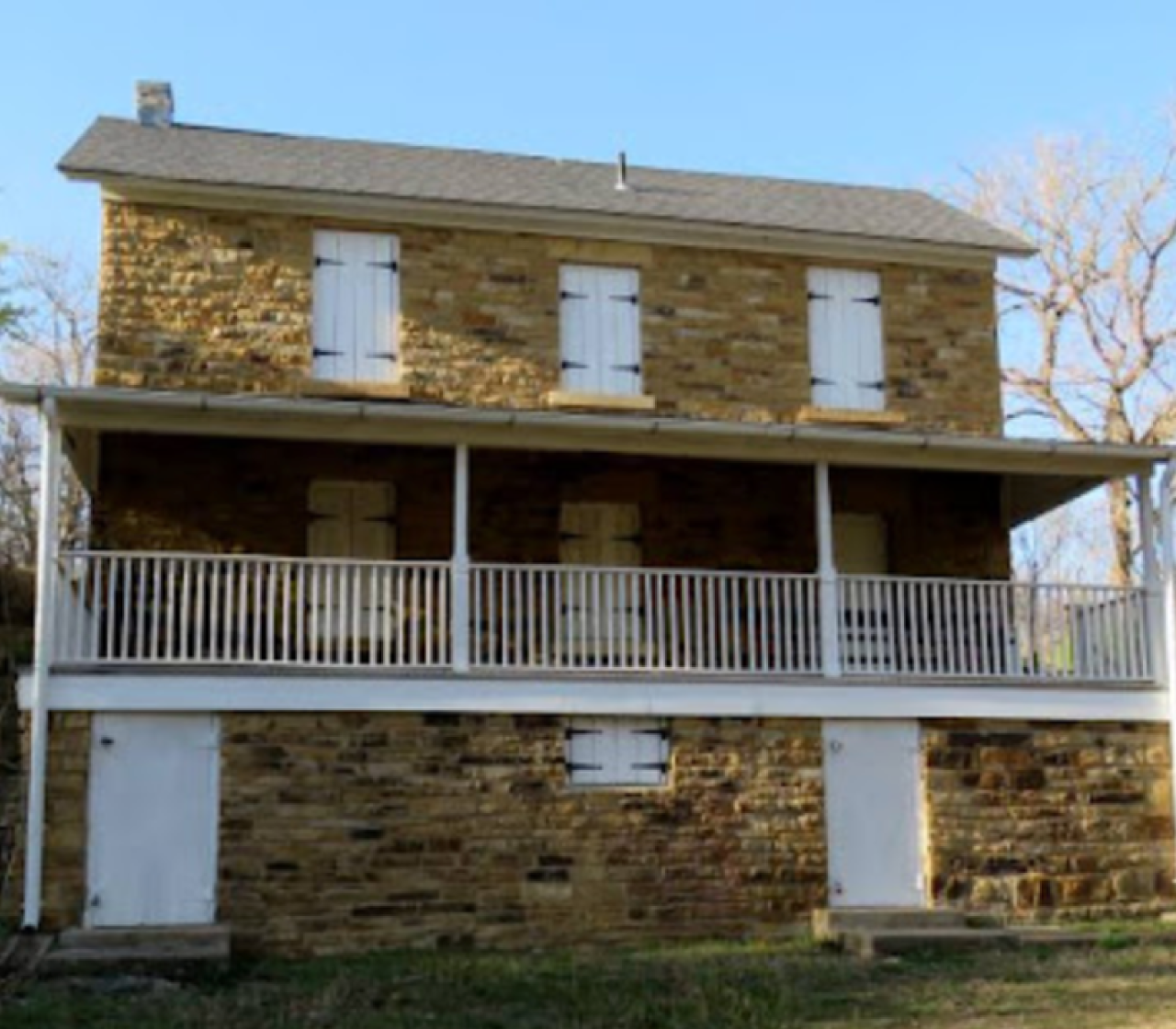
Maras des Cygnes's exhibits are presented on a series of interpretive signs in this drive-through setting near Trading Post. This is part of the Freedom’s Frontier National Heritage Area.
SITE
15740-15644 N 4th St,
Pleasanton, KS 66075
Coordinates - 38.252033, -94.680183
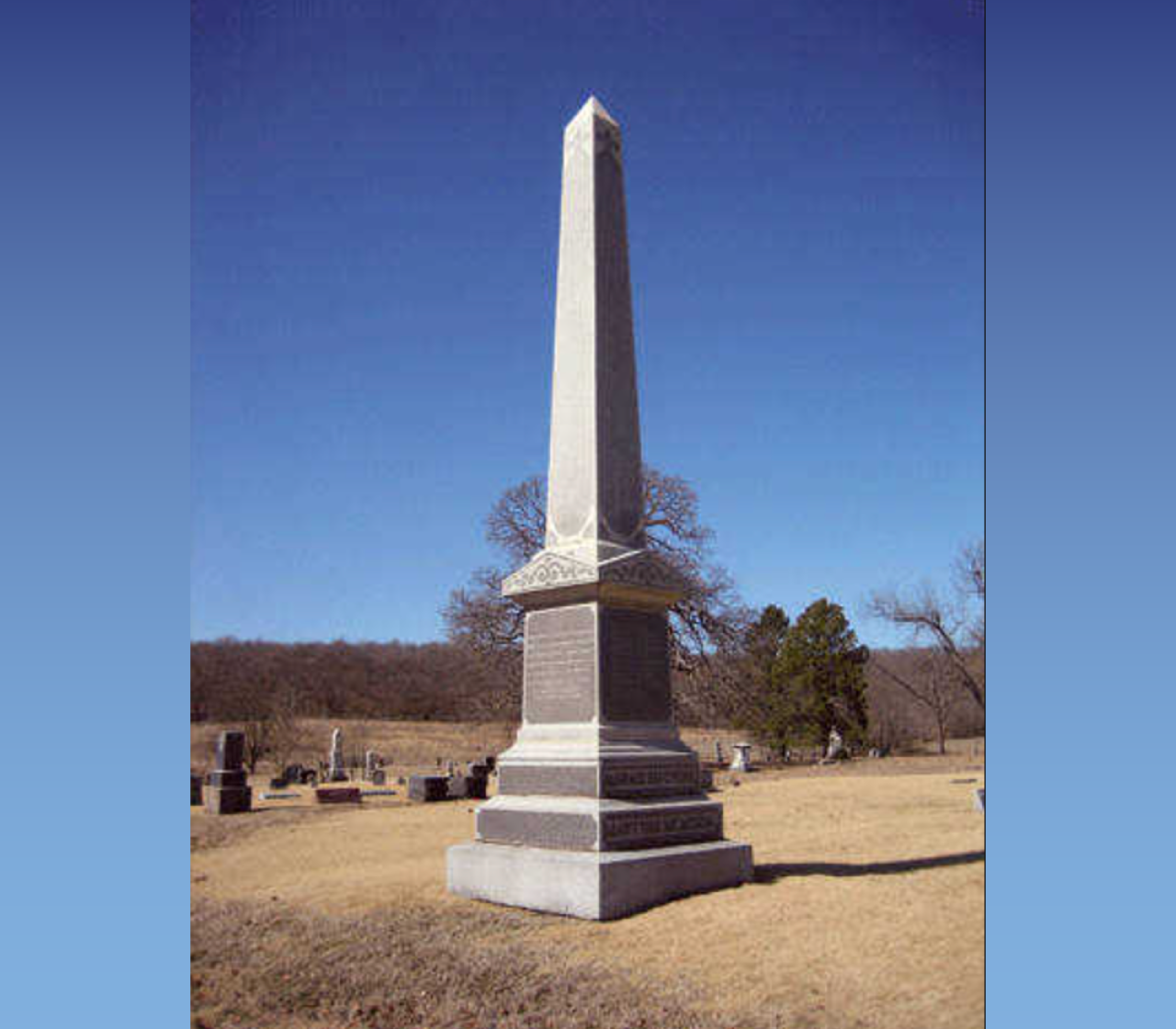
Located in the Trading Post Cemetery
HISTORY
Victims of the Marais des Cygnes Massacre
Rev. B. L. Read
John F. Campbell
William Colpetzer
Michael Robertson
Patrick Ross
William Hairgrove
Asa Hairgrove
Charles Snider
William A Stilwell
Amos Hall
Austin Hall

SITE
20485 K 52,
Pleasanton, KS 66075
Wed-Sat 10am-5pm
Sun 1pm-5pm
HISTORY
On October 25, 1864, on the banks of Mine Creek, two Union brigades of approximately 2,500 troops defeated approximately 7,000 Confederates from General Sterling Price's Army of Missouri. Federal Colonels Frederick W. Benteen and John H. Philips led the attack in one of the largest cavalry battles of the Civil War and a major battle fought in Kansas. About six miles south of Trading Post, Kansas, where the Marais de Cygnes cavalry engagement had occurred earlier in the day, the Union brigades of Col. Frederick Benteen and Col. John Phillips, of Maj. Gen. Alfred Pleasonton’s Provisional Cavalry Division, overtook a retreating Confederate cavalry column from Maj. Gen Sterling Price's Army of Missouri crossing Mine Creek. The rebels, stalled by their 500-wagon supply train crossing the rain-swollen ford, formed a line of about 7,000 men on the north side of the creek. The Federals, although outnumbered by about 4,000 men, attacked as additional troops from Pleasonton’s command arrived during the fight. The Union troopers soon surrounded the Confederates, resulting in the capture of almost 1,000 men and two brigadier generals, John S. Marmaduke and William L. Cabell. The Confederates retreated, and reengaged the Yankee cavalry a few hours later at the Marimton River, losing that skirmish also and pushing Price's army further south. Having lost many men, Price’s goal of occupying Kansas and Missouri was doomed. Price was forced out of Kansas and his Missouri Campaign ended. Mine Creek was the largest Civil War battle fought in Kansas and one of the largest cavalry engagements of the Civil War.
DAY 3 - KANSAS CITY
SITE
6115 Wornall Rd,
Kansas City, MO 64113
Wed-Sun 10am-12pm, 1pm-4pm
HISTORY
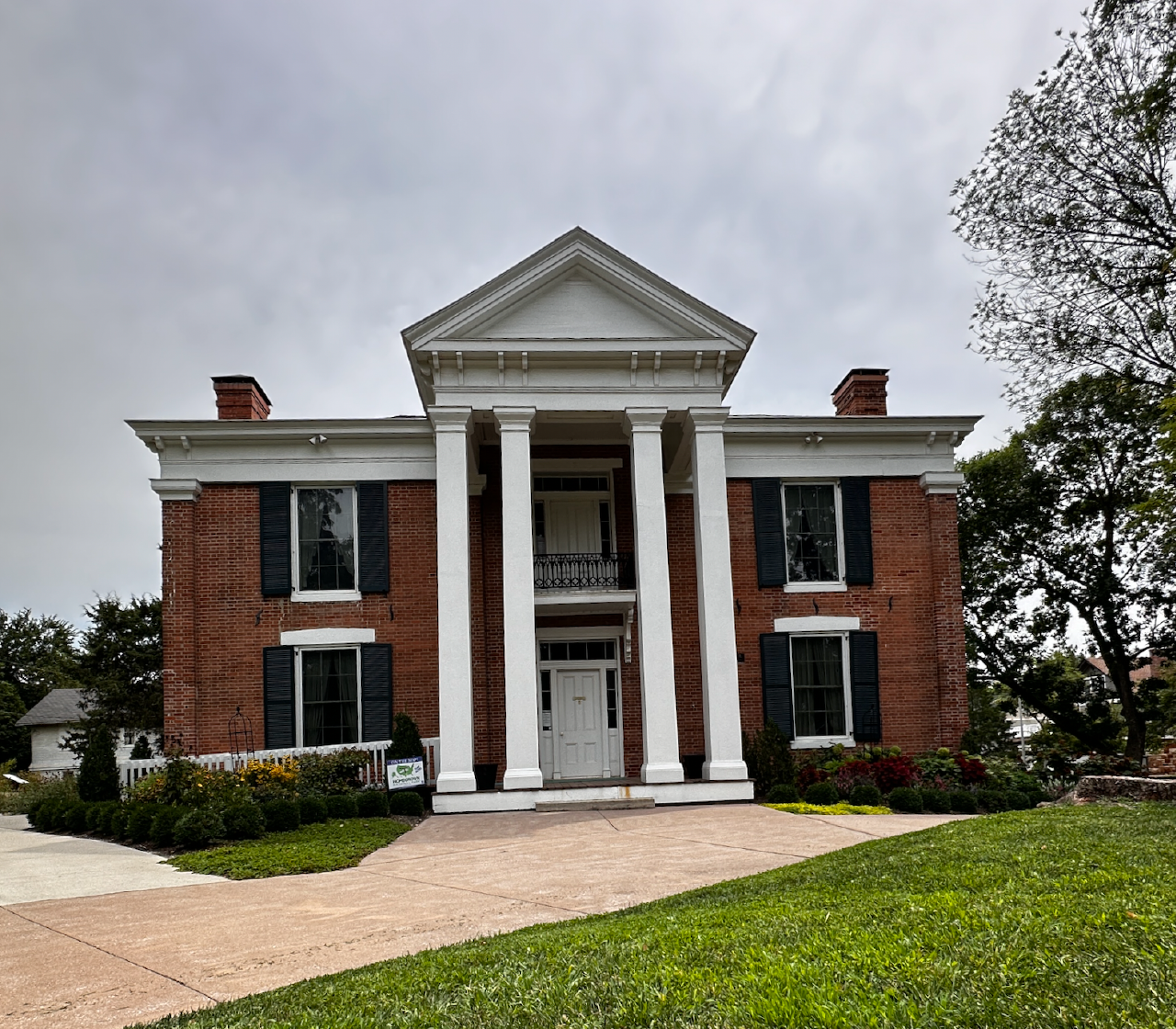
Built 1858. During the American Civil War, the Wornalls' home was used as a field hospital for both the Union and Confederate forces after the Battle of Westport. Built in 1858, the Wornall House is one of the few surviving pre-Civil War homes in Kansas City. Notably, it was used as a field hospital during the Battle of Westport. The Museum is designed to resemble how it may have looked in 1858 and includes many items that belonged to the Wornall family in the nineteenth and early twentieth centuries. The house also contains artifacts from the Civil War and Battle of Westport. In addition, the Wornall House interprets the lives of the enslaved residents of the Wornall farmstead through extensive signs located throughout the home.
SITE
5200 Wornall Road
Kansas City, MO 64112
Located in Loose Park north of Rose Garden adjacent to 52nd Street
HISTORY

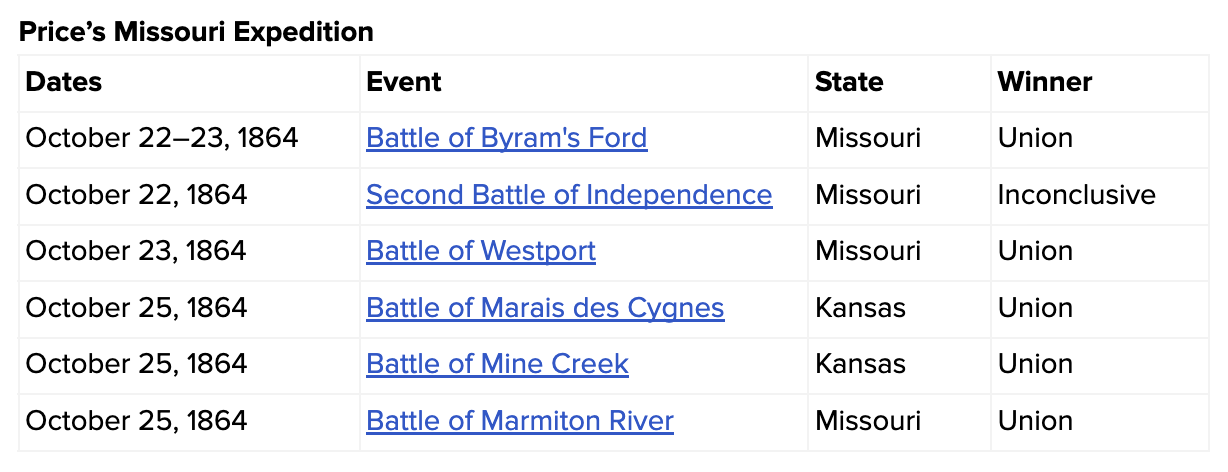
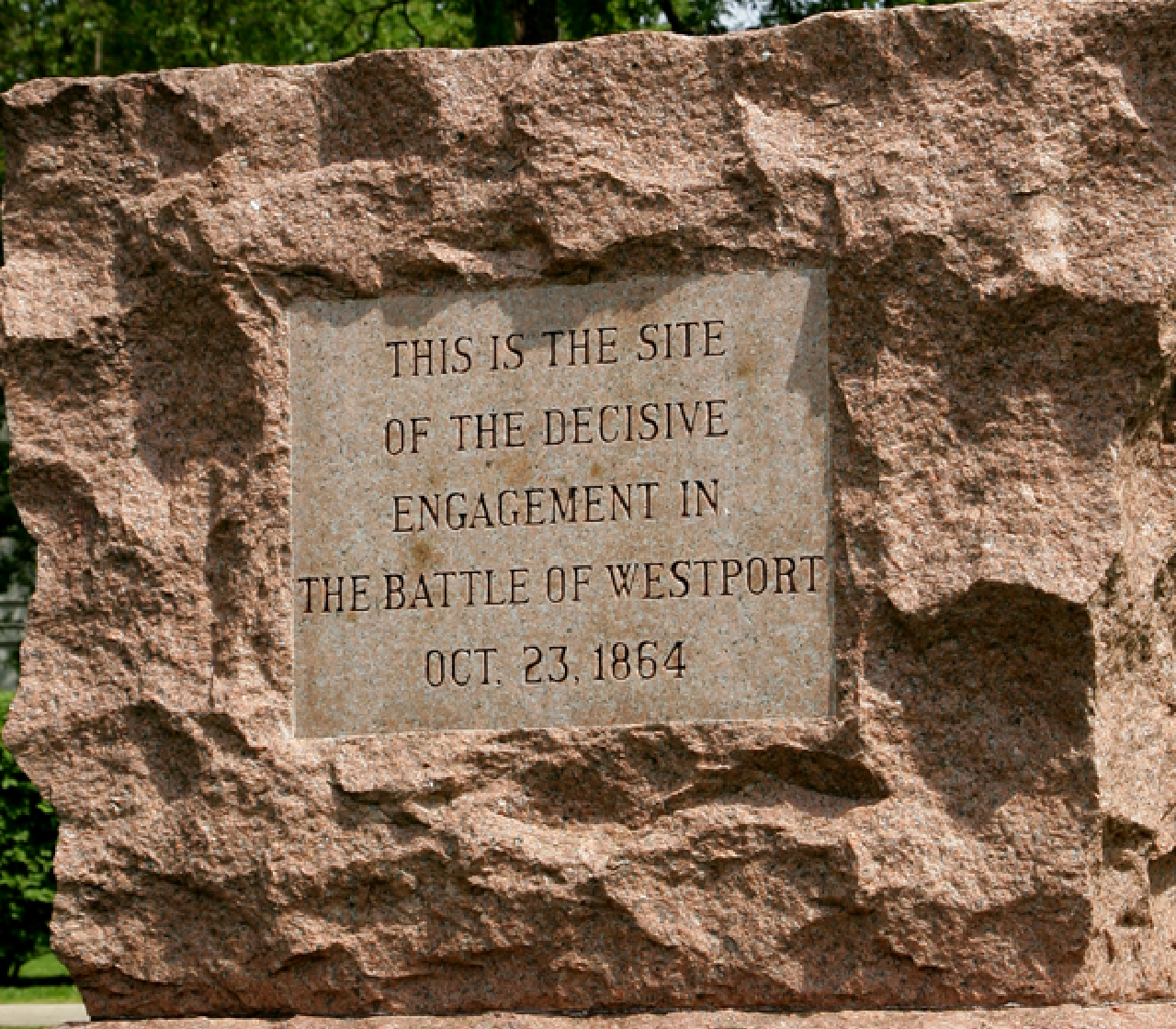
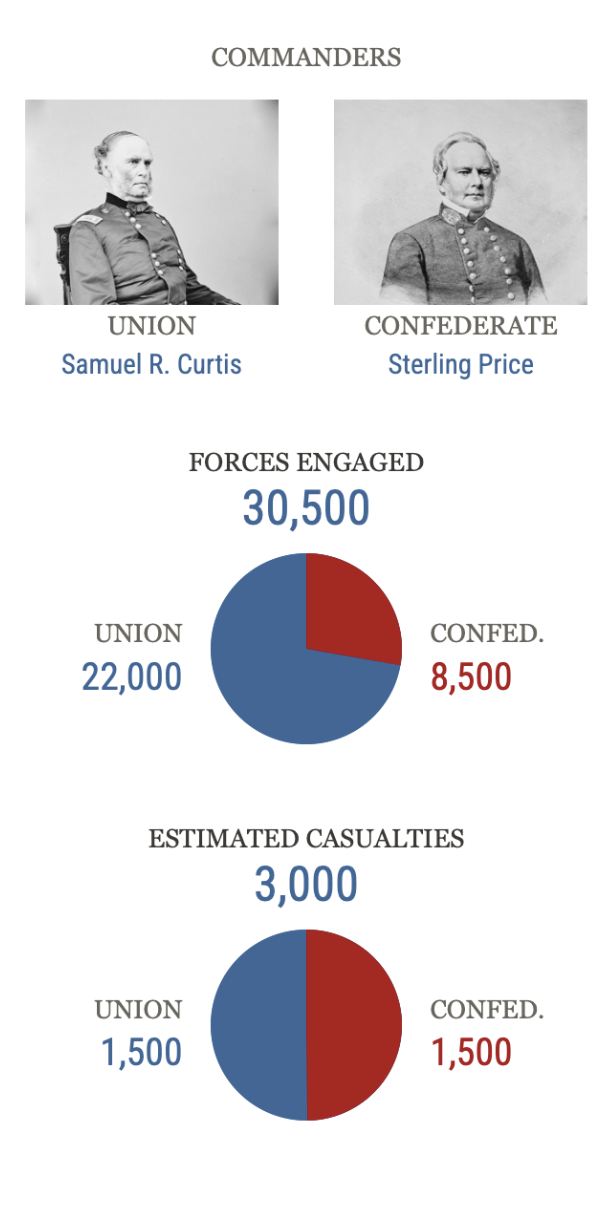
The Battle of Westport, sometimes referred to as the "Gettysburg of the West", was fought on October 23, 1864, in modern Kansas City, Missouri, during the American Civil War. Union forces under Major General Samuel R. Curtis decisively defeated an outnumbered Confederate force under Major General Sterling Price. This engagement was the turning point of Price's Missouri Expedition, forcing his army to retreat. The battle ended the last major Confederate offensive west of the Mississippi River, and for the remainder of the war the United States Army maintained solid control over most of Missouri. This battle was one of the largest to be fought west of the Mississippi River, with over 30,000 men engaged.
The Battle of Byram's Ford (also known as the Battle of Big Blue River and the Battle of the Blue) was fought on October 22 and 23, 1864, in Missouri during Price's Raid, a campaign of the American Civil War. With the Confederate States of America collapsing, Major General Sterling Price of the Confederate States Army conducted an invasion of the state of Missouri in late 1864. Union forces led Price to abandon goals of capturing the cities of St. Louis and Jefferson City, and he turned west with his army towards Kansas City.
On October 22, Price's army found itself caught between two Union forces, commanded by Major Generals James G. Blunt and Alfred Pleasonton. Part of Price's force conducted a delaying action against Pleasonton in the Second Battle of Independence, while the division of Brigadier General Joseph O. Shelby broke Blunt's line at Byram's Ford on the Big Blue River by crossing at an unguarded ford above the Union defenses. The Union defenders were forced to retreat to the Kansas state line, and the 2nd Kansas State Militia Infantry Regiment was caught at the Mockbee Farm and overwhelmed. Meanwhile, Pleasonton's men pushed Price's rear guard across the Big Blue in the Second Battle of Independence.
On October 23, Pleasonton attacked Confederate forces under Major General John S. Marmaduke at Byram's Ford and forced them back to a height known as Potato Hill. Pleasonton broke through Marmaduke's position, and the rest of the Confederate army was defeated at the concurrent Battle of Westport. While Price's wagon train escaped from Union Brigadier General John McNeil and his brigade, the Confederate army withdrew southwards in disorder. After suffering further defeats along the way, Price's army reached Texas by December, having lost over two-thirds of its men. The Confederates also lost equipment and supplies, while the Union war effort was only minimally hampered; the campaign was the last major operation west of the Mississippi River. Part of the battlefield is preserved in the Big Blue Battlefield Park, and a portion is listed on the National Register of Historic Places as part of the Byram's Ford Historic District.
Wikipedia - Byram’s Ford
ABT - Battle Page
AA Heritage Trail - History