


Dorchester County,
Maryland
HISTORY - YOUNG HARRIET TUBMAN
1822 - 1849

Harriet Tubman (born Araminta Ross, c. March 1822 – March 10, 1913) was an American abolitionist and social activist. After escaping slavery, Tubman made some 13 missions to rescue approximately 70 enslaved people, including her family and friends, using the network of antislavery activists and safe houses known collectively as the Underground Railroad. During the American Civil War, she served as an armed scout and spy for the Union Army. In her later years, Tubman was an activist in the movement for women's suffrage.
Born into slavery in Dorchester County, Maryland, Harriet Tubman was beaten and whipped by enslavers as a child. Early in life, she suffered a traumatic head wound when an irate overseer threw a heavy metal weight, intending to hit another slave, but hit her instead. The injury caused dizziness, pain, and spells of hypersomnia, which occurred throughout her life. After her injury, Tubman began experiencing strange visions and vivid dreams, which she ascribed to premonitions from God. These experiences, combined with her Methodist upbringing, led her to become devoutly religious.
In 1849, Tubman escaped to Philadelphia, only to return to Maryland to rescue her family soon after. Slowly, one group at a time, she brought relatives with her out of the state, and eventually guided dozens of other enslaved people to freedom. Tubman (or "Moses", as she was called) traveled by night and in extreme secrecy, and later said she "never lost a passenger". After the Fugitive Slave Act of 1850 was passed, she helped guide escapees farther north into British North America (Canada), and helped newly freed people find work. Tubman met John Brown in 1858, and helped him plan and recruit supporters for his 1859 raid on Harpers Ferry.
When the Civil War began, Tubman worked for the Union Army, first as a cook and nurse, and then as an armed scout and spy. For her guidance of the raid at Combahee Ferry, which liberated more than 700 enslaved people, she is widely credited as the first woman to lead an armed military operation in the United States. After the war, she retired to the family home on property she had purchased in 1859 in Auburn, New York, where she cared for her aging parents. She was active in the women's suffrage movement until illness overtook her and was admitted to a home for elderly African Americans, which she helped establish years earlier. Tubman is commonly viewed as an icon of courage and freedom.
AM - HARRIET TUBMAN DRIVING TOUR
5 Sites
25 miles
40 minutes
Locations:
- Cambridge, MD
- Church Creek, MD
- Madison, MD
SITE
4303 Bucktown Rd.
Cambridge Md. 21613
(410) 901-9255
Open by Reservation Only
HISTORY
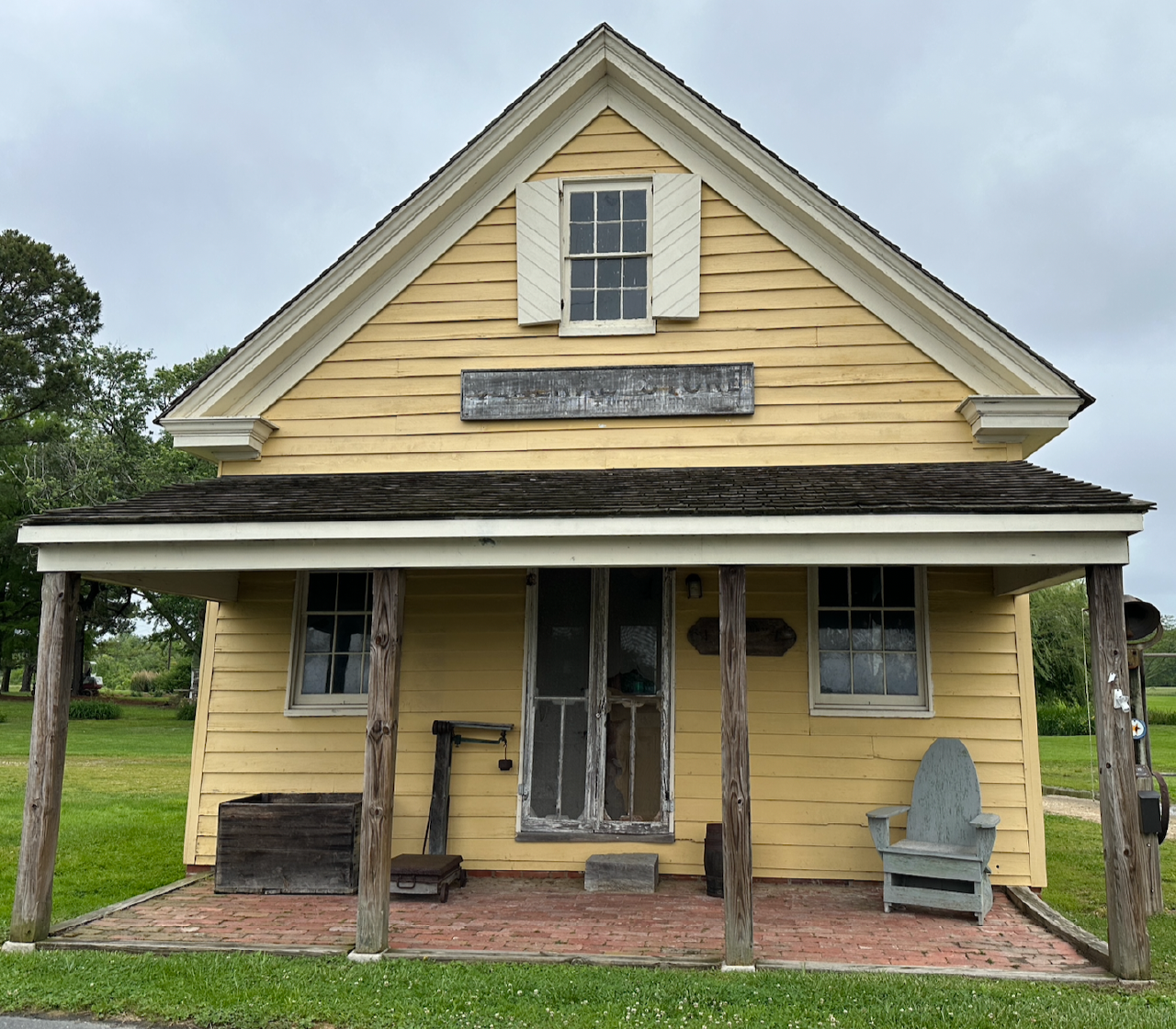
In 1835, Bucktown was a busy community with two stores, a shopkeeper’s home, blacksmith shop, and surrounding farms at this crossroads. Shipyards were nearby on the Transquaking River.
Hired out to a nearby farmer, Harriet Tubman and the farm’s cook went to a store at this crossroads to purchase some goods for the house. At the same time, a slave belonging to another master left his work without permission. His overseer pursued him to the store and ordered Tubman to help him tie up the man, but she resisted. Suddenly, the slave broke free and ran. The overseer grabbed a two-pound weight off the counter and hurled it toward him. It struck young Tubman in the head, almost killing her and causing a severe injury that troubled her for the rest of her life.
Tubman recalled “My hair had never been combed and it stood out like a bushel basket . . . I expect that thar hair saved my life.” The blow from the iron weight cracked her skull. “They carried me to the house all bleeding an’ fainting. I had no bed, no place to lie down on at all, and they lay me on the seat of the loom, and I stayed there all that day and next,” she later recalled. She was forced “to work again and there I worked with the blood and sweat rolling down my face till I couldn’t see.”

SITE
2978 Greenbrier Rd,
Cambridge, MD 21613
Small roadside pull off

HISTORY
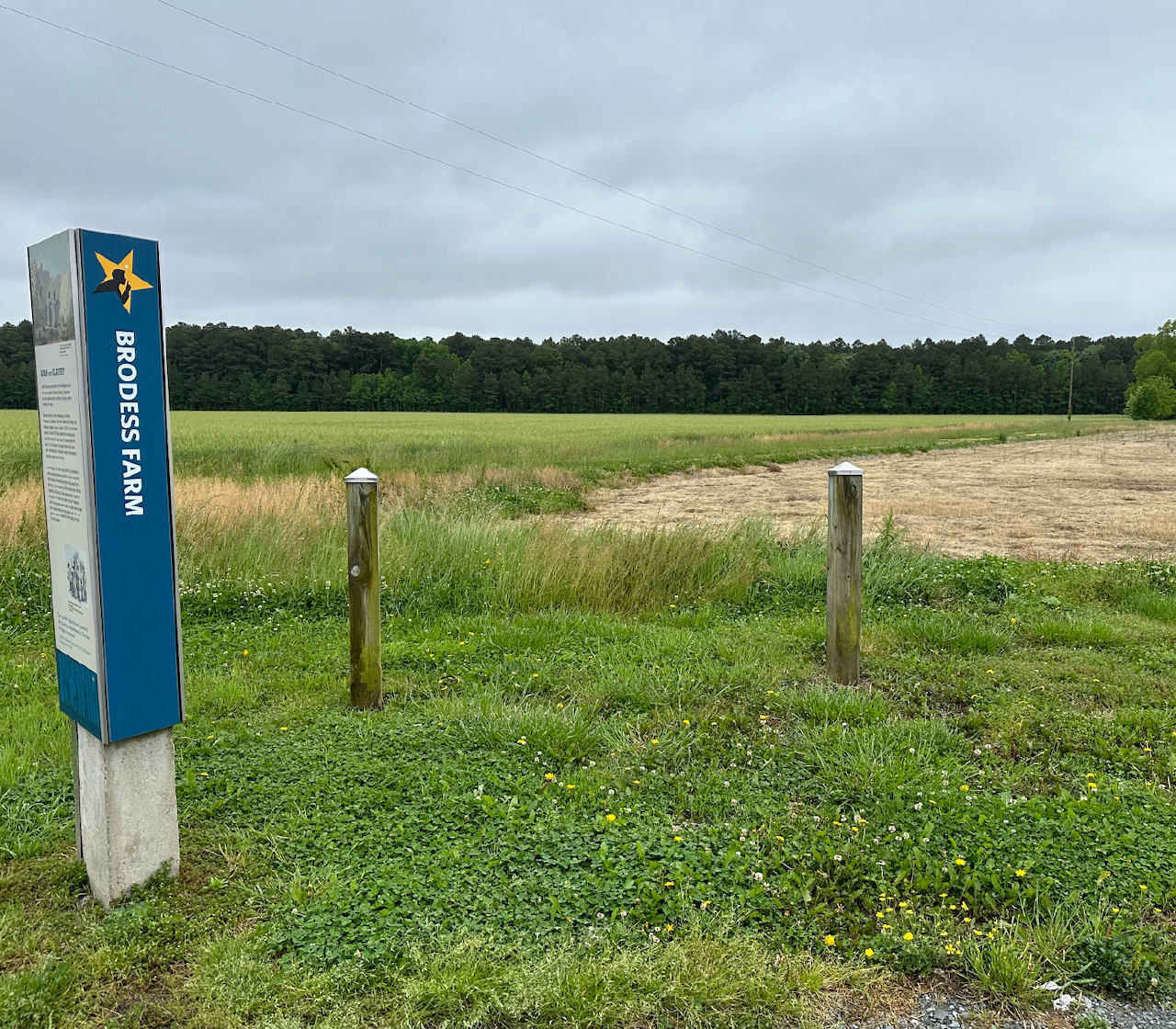
Edward Brodess, Harriet Tubman’s enslaver, lived at this site. He moved Tubman’s mother Rit and her children to his farm in Bucktown after 1823 or 1824. Tubman spent her early years here and on nearby farms. No trace remains of Brodess’ original home that once sat near the existing house at the end of the lane.
Edward Brodess, with a small farm and few livestock, did not have enough work to fully employ all of his slaves. However, he had eight children to support, so he frequently hired his enslaved people out to neighboring farmers. Rit and her children suffered both emotionally and physically from these separations, one of the many injustices of the institution of slavery.
Harriet Tubman later told an interviewer that she seldom lived with the Brodesses. He was “never unnecessarily cruel; but as was common among slaveholders, he often hired out his slaves to others, some of whom proved to be tyrannical and brutal to the utmost limit of their power.” Harriet’s brothers, Ben and Robert, recalled harsher treatment at the hands of the Brodesses. Robert felt Edward Brodess “was not fit to own a dog.” Ben was more to the point: “Where I came from,” he later recalled, “it would make your flesh creep, and your hair stand on end, to know what they do to the slaves.”

SITE
4068 Golden Hill Road
Church Creek, MD 21622
⚠︎ Be prepared for mosquitoes
Harriet Tubman Underground Railroad National Historical Park
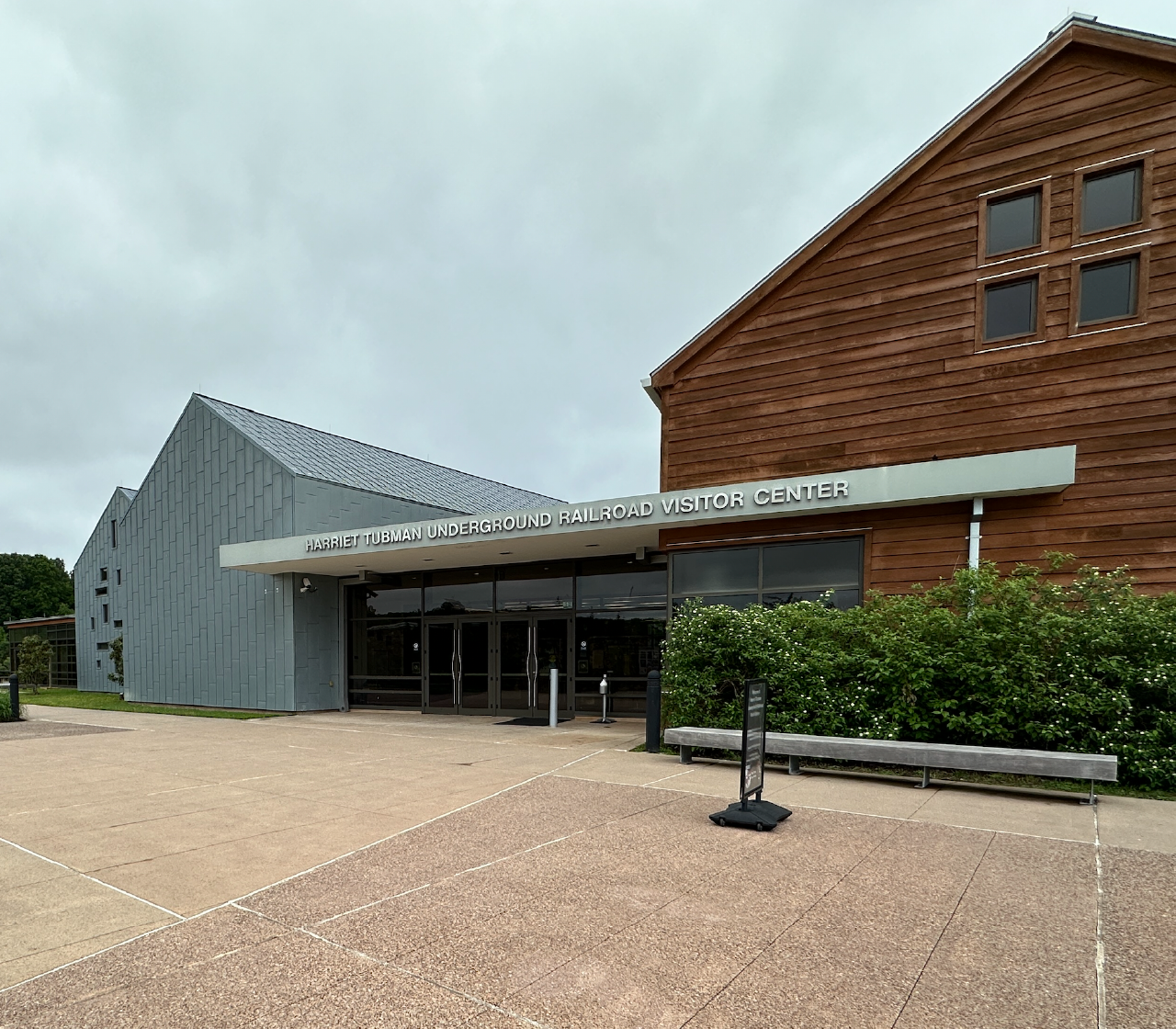
An executive order in March 2013 established Harriet Tubman Underground Railroad National Monument and marked the landscape of Dorchester County, Maryland for its historical significance to Harriet Tubman and the Underground Railroad. At the creation of Harriet Tubman Underground Railroad National Historical Park a year later, the National Park Service identified land in Dorchester, Talbot, and Caroline Counties for potential future acquisition. The Conservation Fund donated the only land currently owned by the National Park Service—480 acres at the Jacob Jackson site, the home of a free African American who delivered a message for Tubman that she was returning to guide her brothers to freedom. The National Park Service also administers a sister park in Harriet Tubman National Historical Park in Auburn, New York, where Harriet Tubman lived in her later years. Passport to your National Parks stamps are available at the Harriet Tubman Underground Railroad Visitor Center.
The Harriet Tubman Underground Railroad Visitor Center was developed by the National Park Service and the Maryland Park Service and opened in 2017. Its 10,000 square feet of exhibit place include interpretive exhibits, hands-on learning, and a movie theater, as well as 17 acres with a short nature trail and an outdoor pavilion. It is located about 20 minutes from the heart of Cambridge, Maryland, near Blackwater National Wildlife Refuge. The Visitor Center is open Tuesday through Sunday, 10am-4pm. There is no admission fee, but donations are welcome.
10am - 4pm Tuesday through Sunday
The Harriet Tubman Museum and Educational Center was started by local community members in the 1990s as part of a grassroots effort to preserve and promote Harriet Tubman’s legacy. It includes information about Harriet Tubman’s life. You can visit this small museum at 424 Race Street in downtown Cambridge, Maryland. Hours are Thursday and Friday, 12 to 3pm and Saturday, 12-4pm. There is no admission fee, but donations are welcome.

SITE
GPS Coordinates: 38.501579,-76.152396
HISTORY
Church Creek was a thriving shipbuilding center on the waterfront during the 1830s. Workers in the maritime trades – shipwrights, caulkers, sail makers and blacksmiths – labored and mingled at the wharves with highly mobile, free black sailors. These “Black Jacks” were part of a secret communication network that spanned not only coastal American towns, but also across the Atlantic. They brought news, ideas, and information to enslaved communities, spreading notions of liberty and equality, as well as gossip. Sometimes they provided a means to escape. In the early 19th century, a large community of enslaved and free black families lived and worked between here, Harrisville and White Marsh Roads.
Church Creek sits along Route 16, which follows an ancient pre-colonial Indian trail used for seasonal migrations and trade between the Chesapeake and Delaware bays. “The great majority of enslaved people who fled this county before the Civil War came from places along this road, which begins in Taylors Island to the west and continues northeast through Cambridge. The freedom seekers followed the direction of this route and headed into Caroline County, Maryland and onto Delaware.” Access to information and escapes via vessels likely secured this route’s reputation as a “Highway to Freedom.”
SITE
White Marsh Road
Madison, MD 21648
GPS Coordinates: 38.491430,-76.216678
HISTORY
Madison

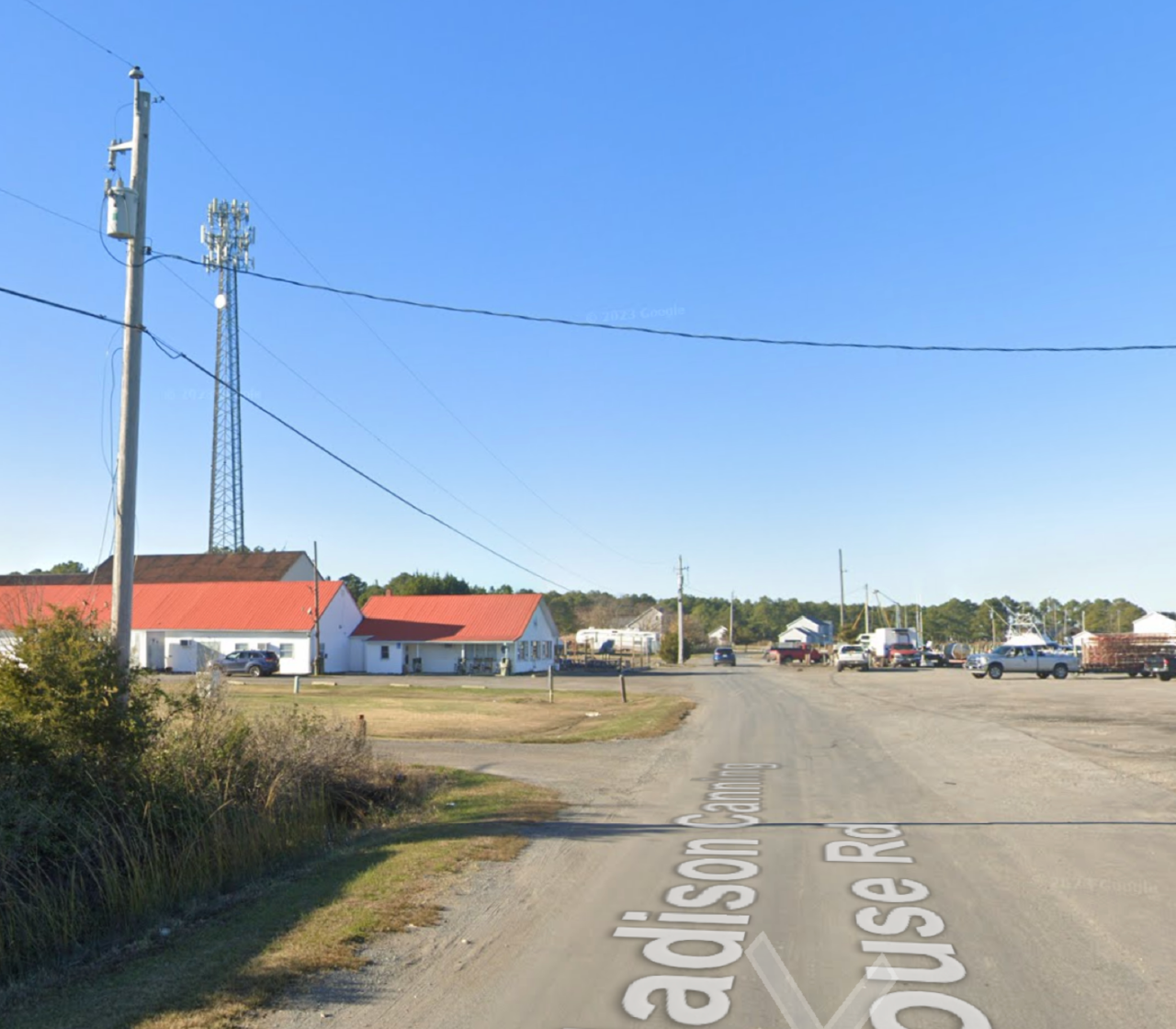
Harriet Tubman spent her formative years around Madison. After living in Bucktown as a young child and adolescent, teenaged Harriet Tubman was hired out to work for John T. Stewart, who owned farms, a shipyard and businesses here. She toiled in the Stewarts’ house (no longer standing), then in their fields, on the docks and in their timber business.
Working for the Stewarts brought Harriet back near the community where her father lived and where she had been born. Tubman’s father, Ben Ross, was set free in 1840, and he worked in Stewart’s lumbering operation. Harriet learned important outdoor survival skills while laboring with her father in the woods, such as how to navigate by the stars, and find food and fresh water. These skills later proved vital as she confidently guided passengers along the Underground Railroad to freedom.
Harriet Tubman successfully led away Winnebar Johnson, enslaved by Samuel Harrington, from here in early June 1854. Johnson later passed through Underground Railroad agent William Still’s office in Philadelphia, where Still noted that Johnson had been “brought away by his sister Harriet two weeks ago.” Johnson was passed along to the bustling port of New Bedford in Massachusetts, where he lived and worked with other freedom seekers, some from Dorchester County.
In December 1854, Tubman had a coded letter sent to Jacob Jackson, a free black farmer who lived west of Madison. The postmaster read the letter and confronted Jackson, who denied knowing what it meant. But Jackson quickly notified Tubman’s brothers that she planned to lead them north from their parents’ home at Poplar Neck in Caroline County. When Harriet Tubman’s three brothers made it to freedom in Philadelphia, they chose as their aliases: James Stewart, John Stewart, and William Henry Stewart – the names of the white Stewart brothers.
Malone's Church

Araminta Ross or “Minty,” later known as Harriet Tubman, was probably born in 1822 at Anthony Thompson’s farm on nearby Harrisville Road. Thompson cultivated grains and other foodstuffs, but timbering the white oak, pine, walnut and maple on his lands occupied the majority of his enslaved people’s efforts. By the time Harriet was born, Thompson enslaved nearly 40 people, including Ben Ross, her father. Ben was one of Thompson’s most valuable men. As a timber cutter and inspector, Ben’s skills increased the profitability of Thompson’s lands.
Tubman’s mother, Rit belonged to Thompson’s stepson, Edward Brodess, who later moved Rit and five of her children, including young Araminta (Harriet Tubman), to his farm in Bucktown. By 1840, Rit, Tubman, and several siblings were back living on Thompson’s farm. Harriet Tubman’s birth site is on private property. Nearly 200 years after her birth, no structural evidence of slave quarters remains at the site. Oral tradition suggests that Harriet Tubman worked and lived near the historic Malone’s Methodist Episcopal Church with her free husband, John Tubman.