

Chicago,
Illinois
Featuring - Abraham Lincoln, Ulysses S. Grant
AM - OUTDOOR SITES
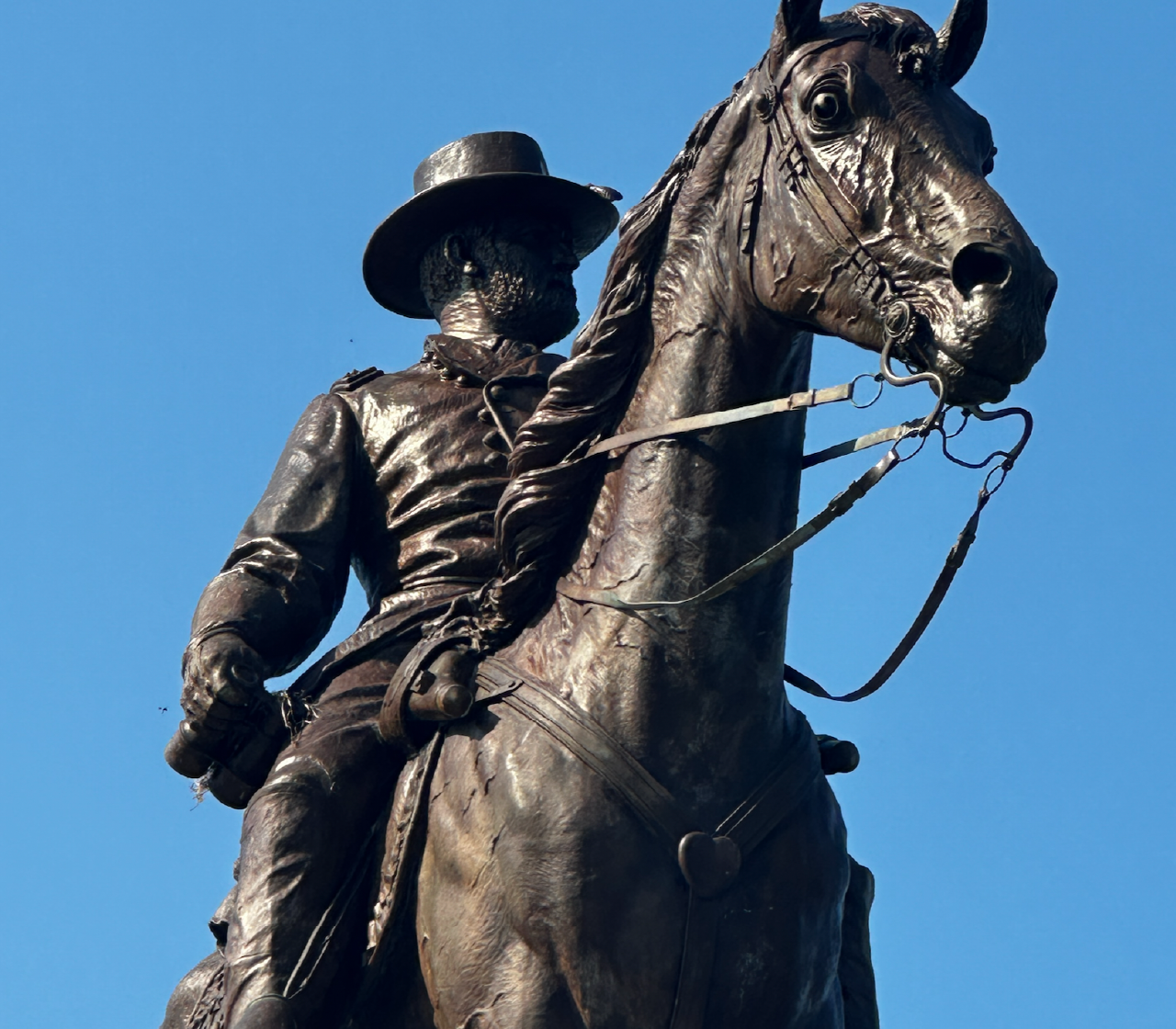
Located within Lincoln (Abraham) Park
Artist - Louis T. Rebisso
Installed - 1891
Civil War hero and two-term President of the United States Ulysses S. Grant (1822–1885) is memorialized with this equestrian bronze sculpture which stands on a massive arched base of rusticated stone.
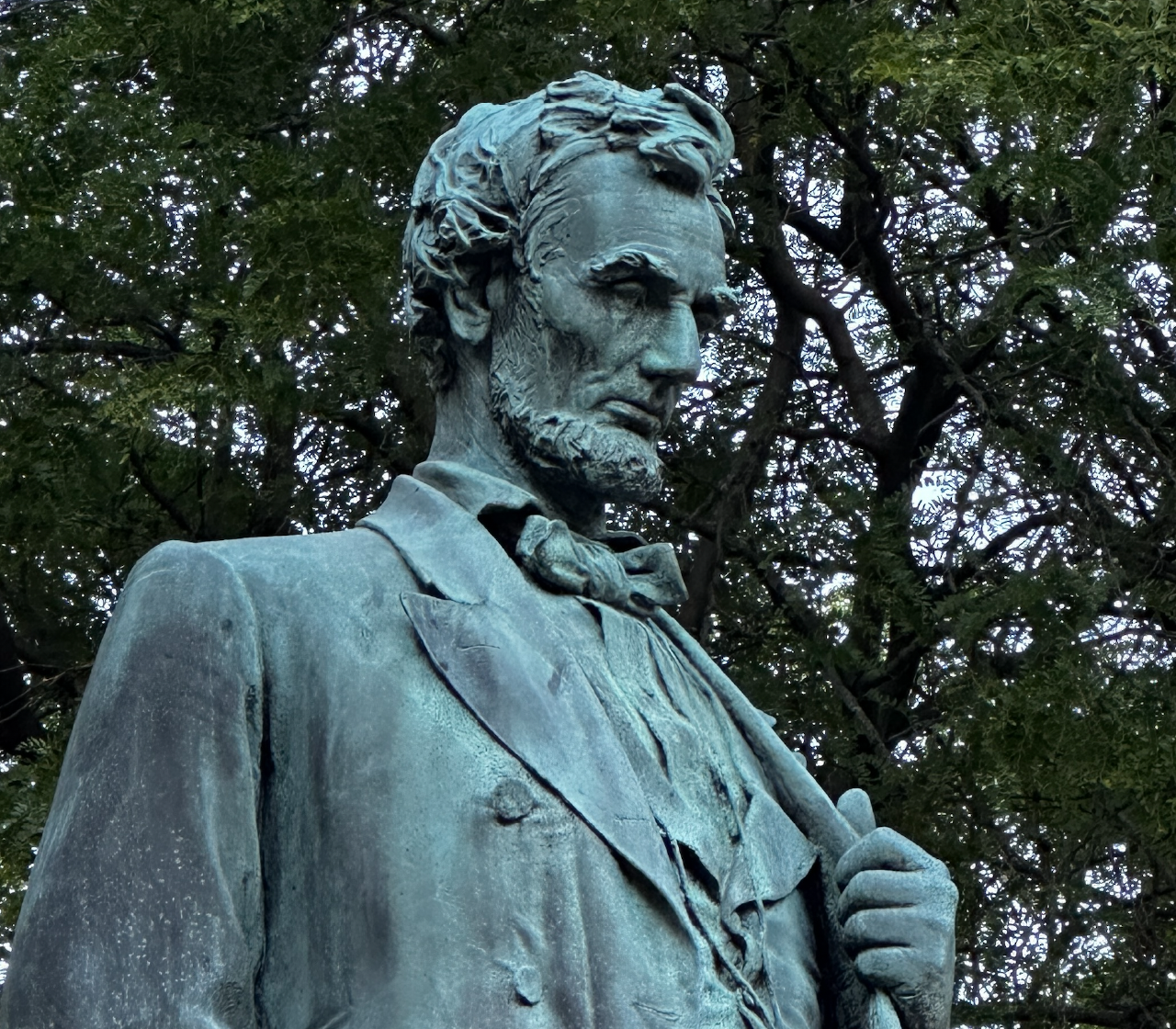
Located within Lincoln (Abraham) Park.
Artist - Augustus Saint-Gaudens
Artwork Year Installed - 1887
Other Designer - McKim, Mead and White
Features - Artworks & Monuments, Outdoor, Type: Sculpture
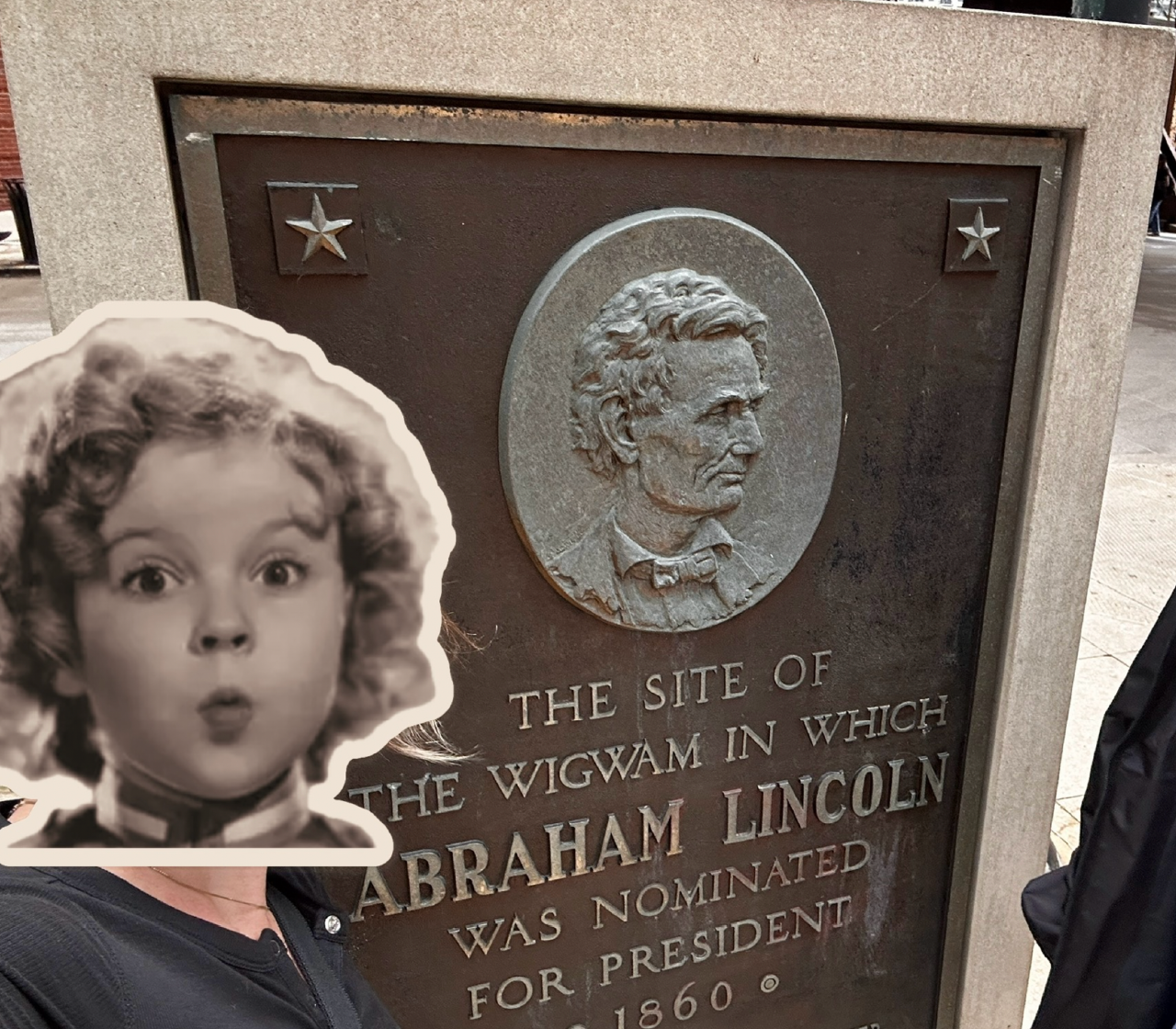
SITE
Southeast Corner of Lake Street and Wacker Drive
Chicago, IL 60606
Wikipedia - The WIgwam
Chicago Mag
City of Chicago
HISTORY

Sauganash built 1831, destroyed 1851;
Wigwam built 1860, destroyed 1867
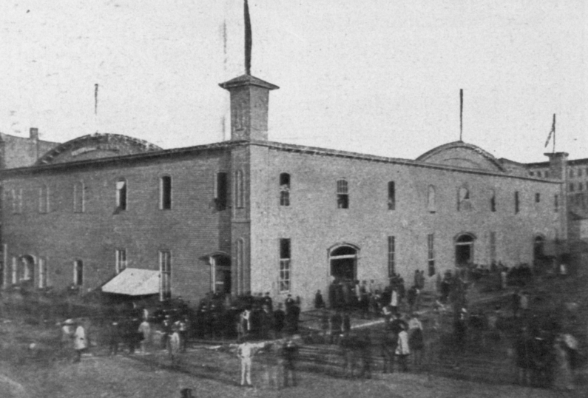
The Wigwam was a convention center and meeting hall that served as the site of the 1860 Republican National Convention. It was located in Chicago, Illinois, at Lake Street and Market (later Wacker Drive) near the Chicago River. This site had previously been the site of the Sauganash Hotel, Chicago's first hotel. This is where supporters ushered Abraham Lincoln to the party nomination and the eventual U.S. Presidency. The location at Lake and Wacker was designated a Chicago Landmark on November 6, 2002. The name "Wigwam" was later associated with host locations for both the 1864 Democratic National Convention and the 1892 Democratic National Convention in Chicago. The 1860 Republican National Convention was a presidential nominating convention that met May 16–18 in Chicago, Illinois. It was held to nominate the Republican Party's candidates for president and vice president in the 1860 election. The convention selected former representative Abraham LinPleasantoncoln of Illinois for president and Senator Hannibal Hamlin of Maine for vice president. On May 18, 1860 at the Republican National Convention in Chicago, Lincoln won the nomination on the third ballot, beating candidates such as Seward and Chase. A former Democrat, Hannibal Hamlin of Maine, was nominated for vice president to balance the ticket. Lincoln's success depended on his campaign team, his reputation as a moderate on the slavery issue, and his strong support for internal improvements and the tariff. Pennsylvania put him over the top, led by the state's iron interests who were reassured by his tariff support. Lincoln's managers had focused on this delegation while honoring Lincoln's dictate to "Make no contracts that will bind me". Entering the 1860 convention, Senator William H. Seward of New York was generally regarded as the front-runner, but Lincoln, Governor Salmon P. Chase of Ohio, former representative Edward Bates of Missouri, and Senator Simon Cameron of Pennsylvania all commanded support from a significant share of delegates. Seward led on the first ballot but fell short of a majority, while Lincoln finished in a strong second place. Cameron's delegates shifted to Lincoln on the second ballot, leaving Lincoln essentially tied with Seward. Lincoln clinched the nomination on the third ballot after consolidating support from more delegates who had backed candidates other than Seward. Hamlin was nominated on the second vice presidential ballot, defeating Cassius Clay of Kentucky and several other candidates. The ticket of Lincoln and Hamlin went on to win the 1860 general election. After taking office in 1861, Lincoln appointed all four of his major opponents to his cabinet: Seward for secretary of state, Chase for secretary of the treasury (and later for chief justice), Bates for attorney general, and Cameron for secretary of war.
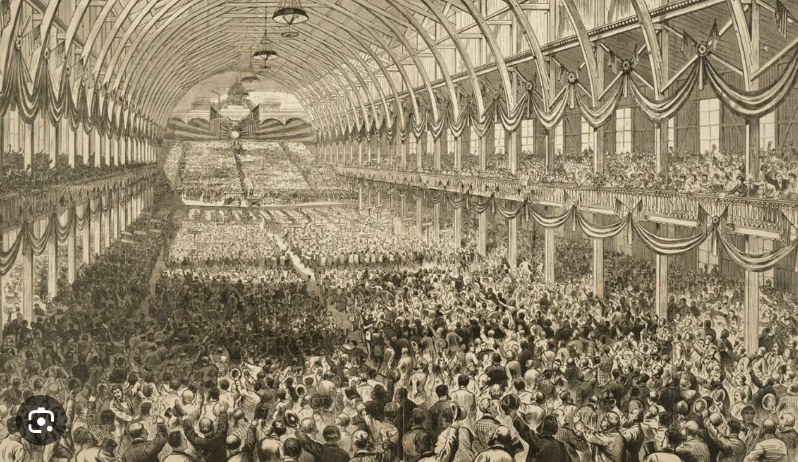
Wikipedia - 1860 Republican National Convention
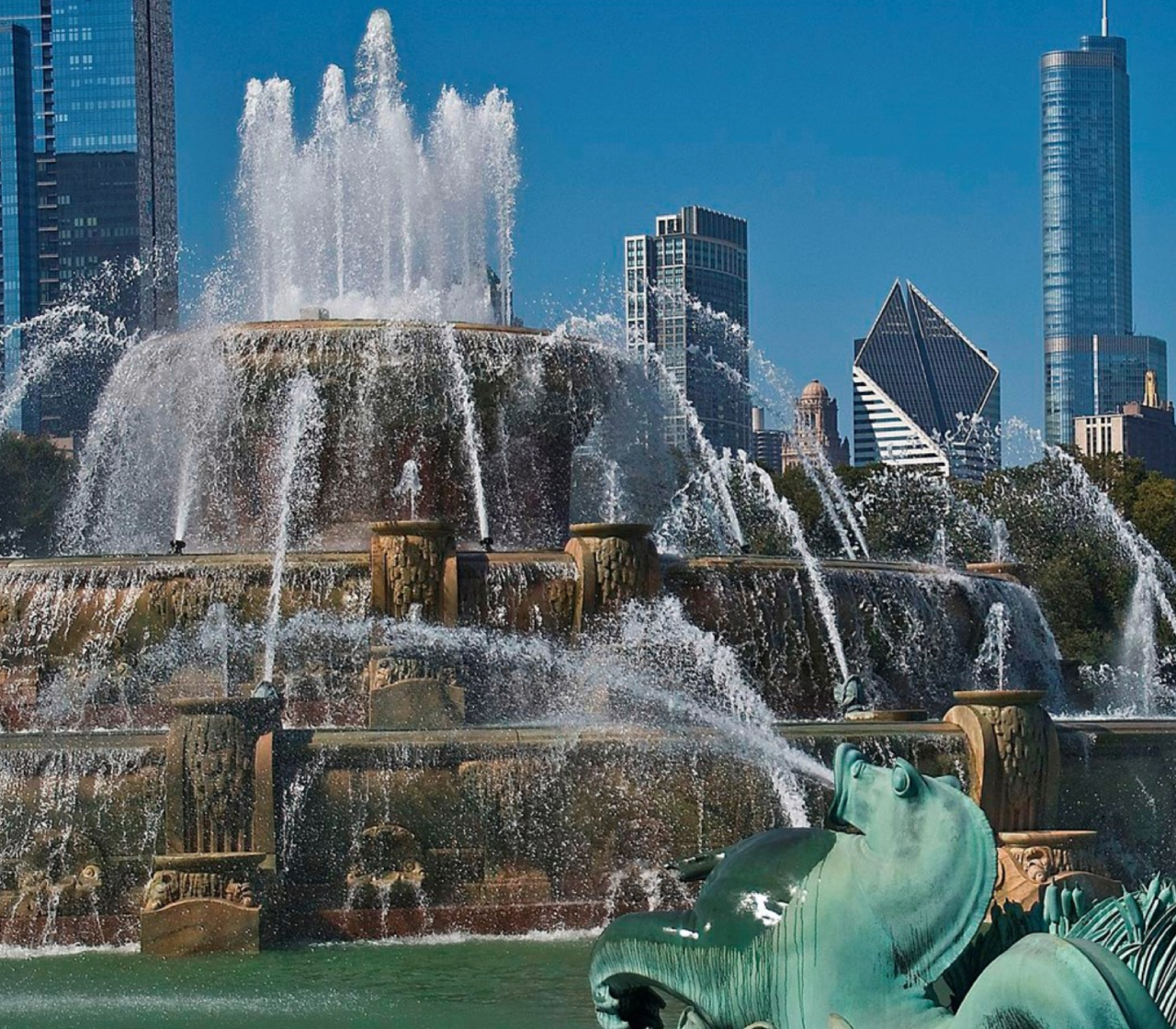
SITE
Grant Park totals 312.98 acres and is a public park located in Chicago’s central business district in the Loop Community area. Grant Park’s most notable features include Maggie Daley Park, Buckingham Fountain, the Art Institute of Chicago, and a portion of the Museum Campus that includes the Field Museum and the Shedd Aquarium.
HISTORY
Grant Park's beginnings date to 1835, when foresighted citizens, fearing commercial lakefront development, lobbied to protect the open space. As a result, the park's original area east of Michigan Avenue was designated "public ground forever to remain vacant of buildings."
Officially named Lake Park in 1847, the site soon suffered from lakefront erosion. The Illinois Central Railroad agreed to build a breakwater to protect the area in exchange for permission for an offshore train trestle. After the Great Fire of 1871, the area between the shore and trestle became a dump site for piles of charred rubble, the first of many landfill additions.
From 1896-1931, the South Park Commissioners acquired land for the park. In 1901, the City transferred the park to the South Park Commission, which named it for Ulysses S. Grant (1822-1885), 18th President of the United States. Renowned architect Daniel H. Burnham envisioned Grant Park as a formal landscape with museums and civic buildings. However, construction was stalled by lawsuits launched by mail-order magnate Aaron Montgomery Ward, who sought to protect the park's open character.
Finally, in 1911, the Illinois Supreme Court ruled in Ward's favor. New landfill at the park's southern border allowed construction of the Field Museum to begin, and the park evolved slowly. In 1934, the South Park Commission was consolidated into the Chicago Park District, which completed improvements using federal relief funds.
In 1974, the Chicago Park District acquired more property to expand the park. Property was donated in 2003 and the City transferred land in 2014 for additional expansion of Grant Park.
In the mid-1970s, the Chicago Park District replaced the old park lot with the Richard J. Daley Bicentennial Plaza, a complex that provided a new 3700-car underground garage with major recreational facilities. Dedicated to Chicago’s former Mayor Richard J. Daley (1902 - 1976), the facility included a new field house for indoor recreational programming as well as several outdoor amenities such as tennis courts, an ice-skating rink, picnic areas, and Grant Park’s first playground.
In 2014, the Chicago Park District began transforming the northeastern part of Grant Park, including the former Richard J. Daley Plaza, into “Maggie Daley Park,” a park within Grant Park. The Park District hired Michael Van Valkenburgh Associates, an internationally renowned landscape architecture firm to design the new park space. Serving as a counterpoint to the symmetry and formality of Grant Park, the design incorporates curvilinear forms, dramatic topography, and many whimsical elements.
PM - LIBRARY
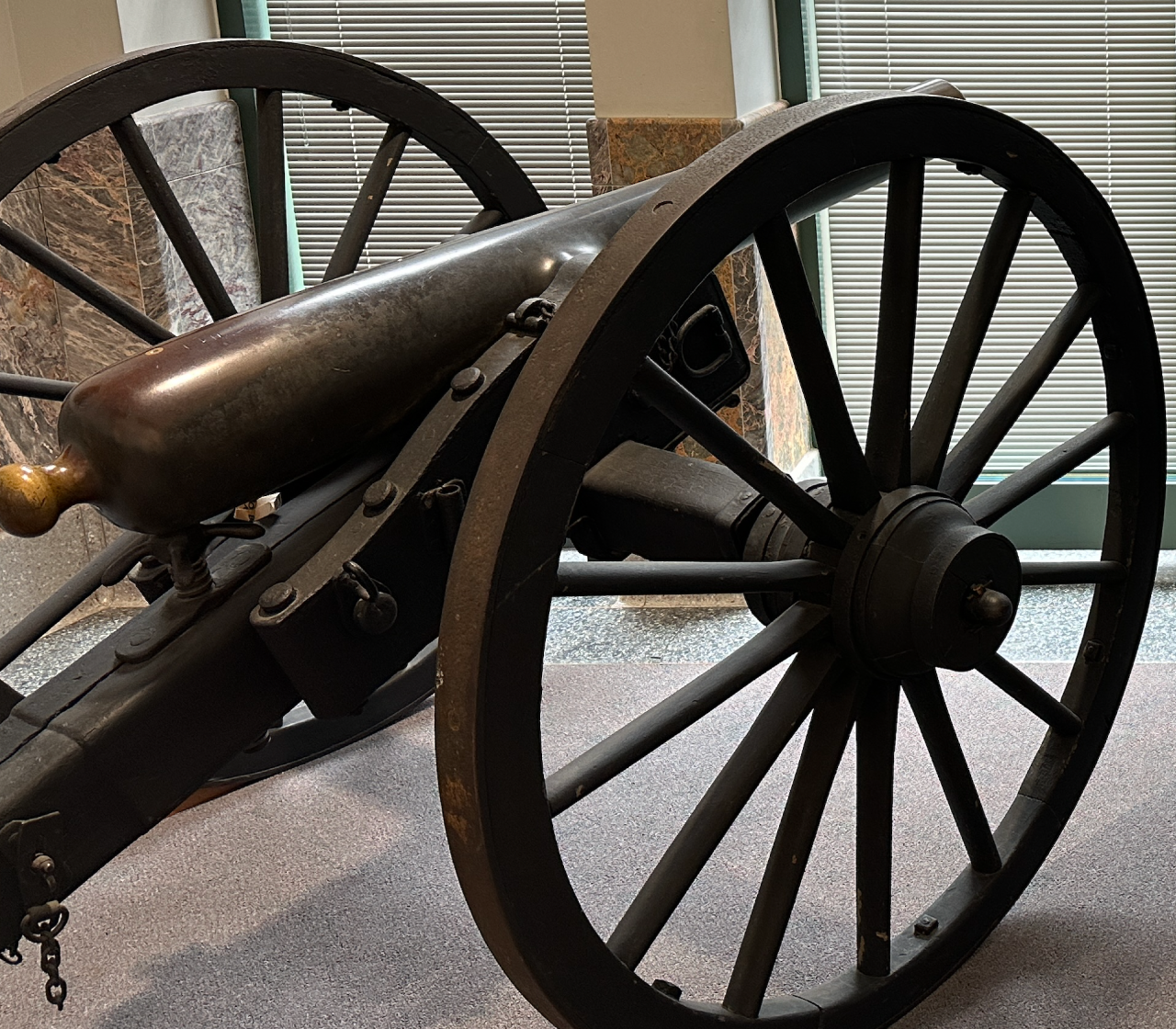
SITE
Located within the Harold Washington Library Center.
Mon-Thu 9am-8pm
Fri-Sat 9am-5pm
Sun 1pm-5pm
COLLECTIONS
American Civil War Photographs and Images and Grand Army of the Republic Photographs and Images
Special Collections Unit
Identifier - spe-w00074
Material - 1861-1866
Images in this collection predominantly relate to the American Civil War—its battles, rank and file soldiers, leaders, veterans, politics and symbolism. A large portion of this material focuses on soldiers and leaders from Illinois, with a wider focus on soldiers from the American Midwest. Many formats are represented, from early photographic formats like tintypes to postcards to oil paintings.
NOTABLE PIECES:
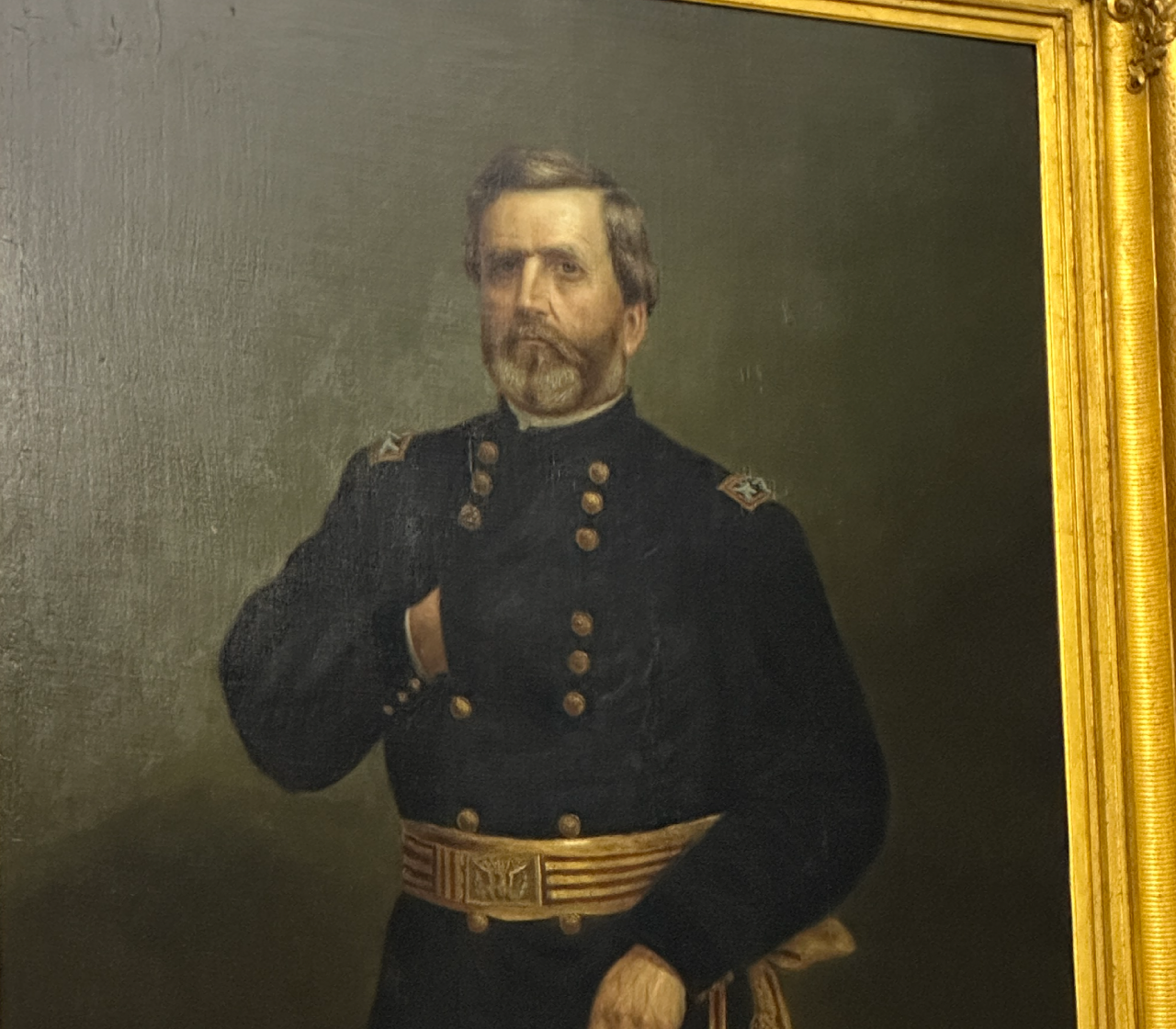
General George H. Thomas, 1873
Artist - Alden Finley Brooks (1840-1932)
Chicago Public Library, Grand Army of the Republic Collection, 72.254
Identifier - spe-w00074
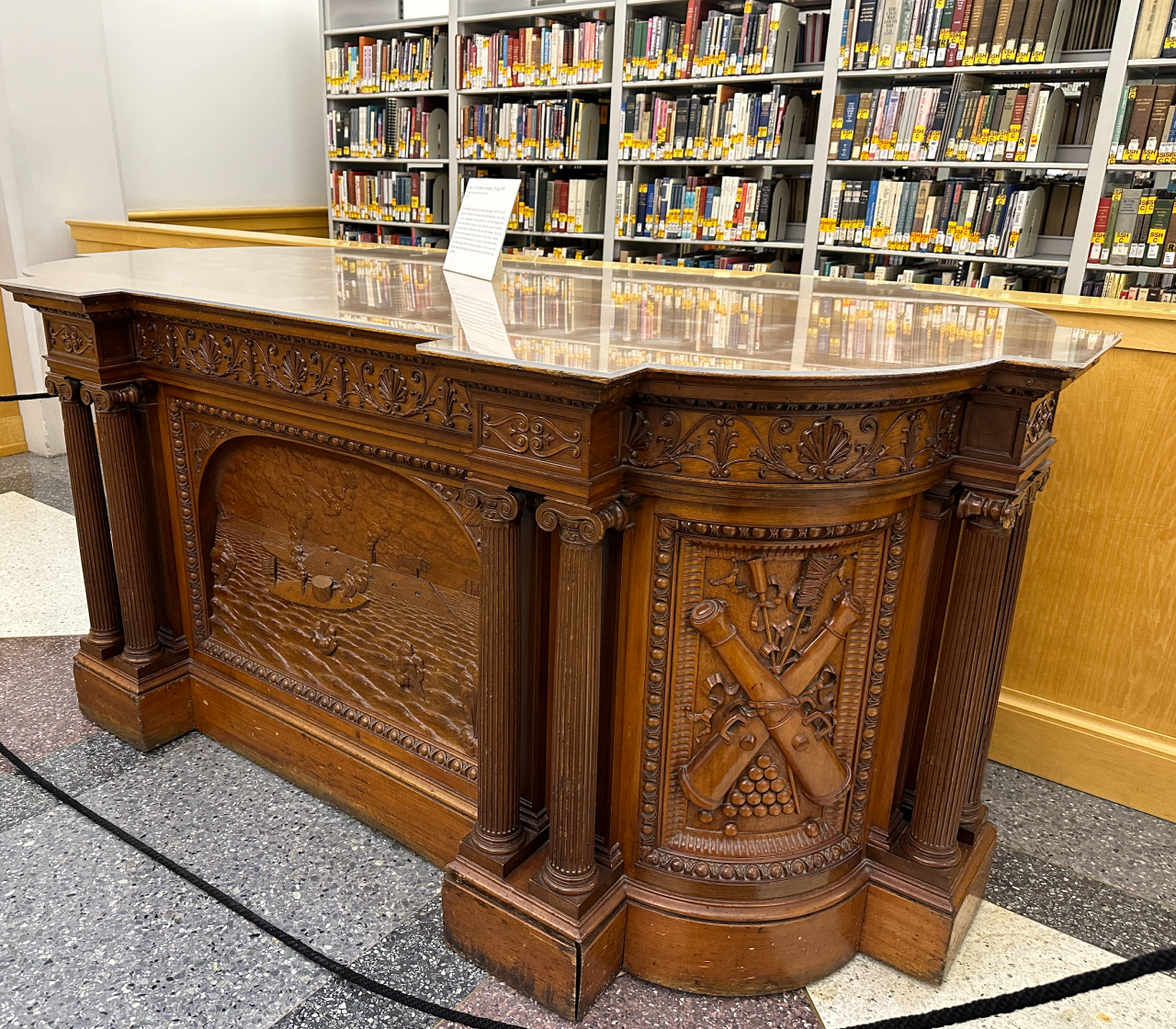
Grand Army of the Republic oak altar, 1897
Artist -A.H.Andrews Company, Chicago
Chicago Public Library, Special Collections, 84.72
American Civil War Documents, Manuscripts, Letters and Diaries and Grand Army of the Republic Collections
Special Collections Unit
Identifier - spe-w00073
Material - 1860-1866
Material in this collection predominantly relates to the American Civil War—its battles, rank and file soldiers, leaders and veterans. A large portion of this material focuses on the experience of soldiers and leaders from Illinois. Included are letters and diaries that capture not only important information about troop movements, battle strategies and leaders’ decisions, but also the often difficult and mundane life of the rank-and-file soldier marching great distances, waiting for something to happen and missing life back home.Other major topics in this collection include slavery throughout the world in the centuries leading up to the Civil War; Abraham Lincoln; and the veterans’ group, the Grand Army of the Republic, especially its Illinois Departments. These subjects are documented through official papers and publications. Further documentation of the Civil War appears in ephemera, songs and poems, images, patriotic envelopes and currency.